

-
- show all
-
Trending Now
- Amino acids Amino acids
-
- show all
-
Trending Now
- Nootropics Nootropics
-
- show all
-
Trending Now
- Peptides Peptides
-
- show all
-
- show all
-
Type
- show all
- 5-AMINO-1MQ
- THYMOSIN
- ACTH-1-39
- Adamax Peptide for Research
- AOD-9604
- ARG-BPC
- B7-33
- BPC-157
- BRONCHOGEN
- Show more
- CARDIOGEN
- CJC-1295
- CJC-DAC
- CORTAGEN
- DSIP
- EPITHALON
- GC-1-SOBETIROME
- GHK-CU Cosmetics & Supplements
- GHRP-6
- SELANK
- GLP-1
- GRF
- HGH: Top quality Human Growth Hormone
- HGH FRAGMENT 176-191
- IGF-1-LR3
- IGF-DES
- IPAMORELIN
- KISSPEPTIN
- KPV
- LARAZOTIDE ACETATE
- Lipotropin
- LL-37
- LIVAGEN
- MATRIXYL
- MELANOTAN
- MELANOTAN 2
- MOTS
- N-ACETYL
- OXYTOCIN
- P-21
- PANCRAGEN
- PEG-MGF
- PROSTAMAX
- PT-141
- RETATRUTIDE
- SEMAX
- SERMORELIN
- SLU-PP-332
- SNAP-8
- TB-500
- THROMBIN PEPTIDE TP508
- Thymogen Alpha-1
- Thymosin Alpha 1
- TRH
- VIP
- Sarms Sarms
- Cosmetics Cosmetics
-
- show all
-
Trending Now
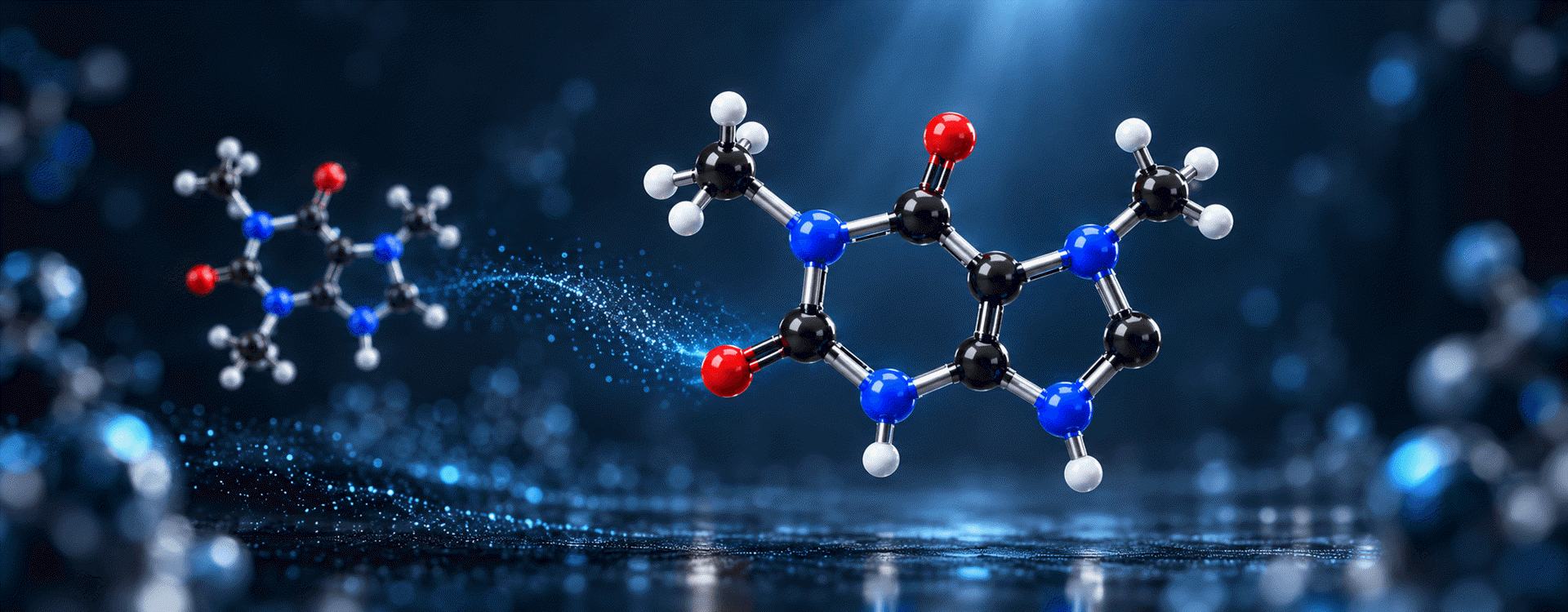
What is paraxanthine, and where does it come from?
Posted on: 10/13/2026Most descriptions of paraxanthine begin by calling it a caffeine metabolite and move on. That phrasing undersells the point. Paraxanthine is not a minor by-product of caffeine metabolism — it is, quantitatively, what caffeine mostly turns into, and it is present in the bloodstream of habitual coffee drinkers at higher concentrations than caffeine itself.
The molecule
Paraxanthine (1,7-dimethylxanthine) belongs to the methylxanthine family, alongside caffeine, theophylline and theobromine. All four share a purine-derived xanthine core and differ only in how many methyl groups are attached and where. Caffeine carries three; paraxanthine, theophylline and theobromine each carry two, in different positions.
The positions matter more than the count. Theophylline (1,3-dimethylxanthine) is a bronchodilator used clinically in asthma. Theobromine (3,7-dimethylxanthine) is the mild stimulant that gives chocolate its lift and is notoriously toxic to dogs. Paraxanthine (1,7-dimethylxanthine) is the third arrangement of the same two methyl groups — and behaves differently again from either. Moving one methyl group around a purine ring is enough to change a compound's half-life, its receptor affinities and its clinical use.
How caffeine becomes paraxanthine
Caffeine does not remain caffeine for long. In the liver, the enzyme CYP1A2 removes methyl groups from it in a process called demethylation. N-3 demethylation to paraxanthine is the dominant route, accounting for roughly 80–90% of caffeine demethylation, with approximately 11% going to theobromine and 4% to theophylline (Grzegorzewski et al., 2022). CYP1A2 is responsible for an estimated 95% of caffeine's systemic clearance.
The enzyme's central role has been demonstrated directly. In CYP1A2-null mice, the Michaelis constant for caffeine-to-paraxanthine conversion shifted from 0.2 to 4.9 mmol/L — a roughly 25-fold change confirming that the reaction depends on that specific enzyme (Labedzki et al., 2002).
A useful way to picture it: caffeine is the envelope, and paraxanthine is the letter inside. Most of what people describe as "the effects of coffee" is being produced by a molecule they have never heard of, working downstream of the one on the label.
The timing, measured
The conversion is fast enough to observe within a single session. In a randomised crossover trial in 26 moderately trained athletes given caffeine at 3, 6 or 9 mg/kg body mass, serum caffeine peaked at 30 minutes while paraxanthine peaked at 60 minutes (Główka et al., 2024). The metabolite lags the parent compound by about half an hour and then persists.
Over repeated dosing the relationship inverts entirely. In a controlled study in which participants took 150 mg of caffeine three times daily for ten days, paraxanthine reached a peak concentration of 11.2 ± 8.5 µg/ml against caffeine's 5.2 ± 2.2, and total exposure over the day was more than twice as high — an area under the curve of 84.8 ± 51.8 µg·h/ml versus 36.1 ± 18.6 (Lin et al., 2022).
In other words, a regular coffee drinker is not primarily a caffeine-exposed person. They are a paraxanthine-exposed person who occasionally tops up the precursor.
The persistence is longer than most people would guess. In that same study, after 24 to 43 hours of complete caffeine abstinence, salivary paraxanthine remained significantly above placebo levels while caffeine itself had returned to baseline (Lin et al., 2022). A full day after the last coffee, the caffeine is gone and the metabolite is still measurable.
Almost none of the caffeine escapes this process. Less than 2% of an administered dose is excreted unchanged in human urine; methylxanthines are extensively metabolised by the liver and do not accumulate in organs or tissues (Arnaud, 2011). Caffeine is, in a meaningful sense, a delivery vehicle.
Why the same coffee affects people differently
CYP1A2 activity varies five- to six-fold between individuals, driven by genetic, environmental and epigenetic factors (Grzegorzewski et al., 2022). Since the enzyme governs almost all caffeine clearance, that variation determines both how quickly someone converts caffeine to paraxanthine and how long either compound persists.
The practical result is that two people drinking identical coffee end up with substantially different internal chemistry. A fast converter produces paraxanthine quickly and clears caffeine within a few hours. A slow one holds a higher caffeine concentration for longer and generates the metabolite more gradually. Tobacco smoke induces the enzyme; oral contraceptives and pregnancy inhibit it.
This is why population-average pharmacokinetic figures describe the middle of a wide distribution rather than any individual, and why the paraxanthine-to-caffeine ratio has become a standard non-invasive probe of liver enzyme function.
It is not in your coffee
A claim circulates that paraxanthine occurs naturally in plants in trace amounts. This does not hold up well against the biosynthesis literature. The plant pathway to caffeine runs from purine nucleotides through xanthosine and 7-methylxanthine to theobromine and then caffeine; paraxanthine is not an intermediate in that sequence, and reviews of methylxanthine biosynthesis describe it as arising through the action of an N-3-demethylase rather than through plant synthesis (Jiang et al., 2025).
The practical implication is straightforward: you cannot meaningfully consume paraxanthine by drinking coffee or tea. You manufacture it afterwards.
How research and commercial material is made
Because paraxanthine is not harvested, it must be produced. Direct chemical synthesis is awkward — it "requires harsh conditions and frequently results in low yield mixtures of non-specifically N-methylated compounds" (Mock et al., 2022). The methyl groups are difficult to remove selectively, and the three dimethylxanthines are hard to separate.
The route that solved this is biocatalytic. An engineered strain of Escherichia coli expressing a mutant bacterial N-demethylase (NdmA4) with its partner reductase performs on caffeine precisely the demethylation the human liver performs. In a scaled reaction, 620 mL of culture converted caffeine to 1.02 mM paraxanthine, purified to 104.1 mg of product (Mock et al., 2022). The commercial supply chain, in effect, borrows the human metabolic step and runs it in a fermenter.
Why the metabolite framing matters
Two consequences follow from paraxanthine being a metabolite rather than a plant constituent.
The first is that almost everyone has already been exposed to it, at meaningful concentrations, for years. Paraxanthine is not a novel molecule entering human physiology; it is a familiar one arriving by an unfamiliar route.
The second is that isolated paraxanthine and coffee-derived paraxanthine behave differently in the body, because one arrives as a bolus and the other is manufactured gradually from a decaying caffeine pool. That distinction turns out to explain an apparent contradiction in the published half-life figures, and it is treated separately in the article on how long paraxanthine stays in the system.
A third consequence is methodological, and it shapes how the research on this compound should be read. Because caffeine converts to paraxanthine, no study can cleanly separate the two by administering caffeine alone — the caffeine arm always becomes a paraxanthine arm within the hour. Any claimed advantage of paraxanthine over caffeine is therefore, strictly speaking, a claim about delivery route and timing rather than about two independent molecules.
Because paraxanthine concentration tracks caffeine intake closely, it also serves as a biomarker. Plasma paraxanthine correlated with self-reported caffeine consumption at r = 0.58 and with estimated absolute intake at r = 0.57 in a clinical sleep study (Youngberg et al., 2011) — which is why the paraxanthine-to-caffeine ratio is used as a standard measure of CYP1A2 enzyme activity in metabolic phenotyping.
These are educational reviews of the published scientific literature on paraxanthine as a chemical compound. They describe doses and outcomes as reported in research settings. They are not medical advice, not a recommendation to use any substance, and not product literature. Compounds discussed are not dietary supplements and are not intended to diagnose, treat, cure or prevent any disease.
Is paraxanthine safe?
Paraxanthine has a more complete formal safety package than most novel ingredients of comparable market age. It also has gaps that the marketing does not mention. Both halves belong in an honest account.
Two toxicology programmes, two sets of numbers
Two independent programmes have assessed paraxanthine, and they do not report identical figures — a point worth stating plainly, because single numbers circulate as though settled.
The first assessed mutagenicity, genotoxicity and oral toxicity of synthetic paraxanthine at greater than 99% purity. It reported an acute oral LD50 of 1601 mg/kg body weight per day, and established a no-observed-adverse-effect level of at least 300 mg/kg bw/day in a 90-day subchronic study in Wistar rats — the highest dose tested, with no mortality or toxic effects at 75, 150 or 300 mg/kg in either the 28-day or 90-day arms (Purpura et al., 2021).
The second reported an acute oral LD50 of 829.20 mg/kg in female Sprague Dawley rats, and a 90-day NOAEL of 185 mg/kg for paraxanthine against 150 mg/kg for caffeine (Szlapinski et al., 2023). The most striking observation in that programme was comparative: mortality occurred in two animals in the high-dose caffeine group, while no mortality or treatment-related adverse effects occurred in any paraxanthine group. The authors concluded paraxanthine "could be a safer alternative to caffeine in humans."
The two LD50 values differ by roughly a factor of two, as do the NOAELs. Different rat strains and protocols explain this. No single figure should be presented as "the" LD50 for paraxanthine.
Genotoxicity
On this point the evidence is consistent. Paraxanthine returned negative results across four assays: bacterial reverse mutation (Ames), in vitro mammalian chromosomal aberration, in vivo mammalian erythrocyte micronucleus, and in vitro mammalian cell gene mutation (Purpura et al., 2021). The second programme independently found revertant colony counts comparable to vehicle controls across all bacterial strains tested (Szlapinski et al., 2023). There is no signal of mutagenic activity.
Human tolerability
Six human trials have administered paraxanthine. All are small and all are acute or short-term, but their tolerability findings are consistent.
- In a dose-response crossover trial at 50, 100 and 200 mg in 12 participants, followed by six further days of daily dosing, "no significant differences were observed among treatments in clinical chemistry panels or the frequency or severity of reported side effects" (Xing et al., 2021).
- In the only head-to-head trial against caffeine, "there was no evidence that PX ingestion adversely affected ratings of side effects associated with stimulant intake or clinical blood markers" (Yoo et al., 2024).
- In a four-way crossover at 100, 200 and 300 mg in 21 adults, blood pressure did not change at any dose, and heart rate decreased with 100 mg relative to placebo at 60 minutes (p = .022) and 180 minutes (p = .001) — the opposite of a pressor or tachycardic signal (Gross et al., 2024).
A four-week mouse study run alongside the human work adds supporting clinical-chemistry data. Animals receiving 20.5 mg/kg/day showed reduced triglycerides, total cholesterol and LDL, and increased HDL, alongside liver and renal function panels that gave no cause for concern (Jäger et al., 2022). The direction of the lipid changes is favourable, though it is a mouse result at a dose chosen to model 100 mg in a human.
What "safer than caffeine" does and does not mean
The comparative claim is the most quoted line in the paraxanthine safety literature and the most easily over-read. What the toxicology establishes is a higher NOAEL and an absence of the mortality seen in high-dose caffeine animals — real findings, produced under proper protocol.
What it does not establish is a wider safety margin at doses people actually take. Rodent lethality studies operate at exposures orders of magnitude above a 200 mg human dose, and a compound can have a more favourable extreme-dose profile while behaving almost identically in the range anyone would use. The Benowitz sympathomimetic data below make exactly that point.
One older finding that complicates the picture
The earliest human study of paraxanthine is also the one least often cited in consumer material. Twelve subjects received oral paraxanthine at 2 or 4 mg/kg — roughly 140 and 280 mg for a 70 kg adult — in a crossover against placebo and dose-matched caffeine. Paraxanthine significantly increased diastolic blood pressure, plasma epinephrine and free fatty acids (Benowitz et al., 1995). At 4 mg/kg the magnitude of response was similar to caffeine's; at 2 mg/kg caffeine produced the greater response.
This does not contradict the more recent haemodynamic data so much as qualify it: paraxanthine is a sympathomimetic compound, not an inert one, and at higher doses it behaves much as caffeine does.
The reproductive signal
One finding sits unresolved and deserves more prominence than it receives. Pregnant C57BL/6J mice dosed intraperitoneally with 175 or 300 mg/kg/day on gestation days 11–12 showed a 21% resorption rate and a 46% malformation rate at the higher dose, with a dose-related increase in total malformations, chiefly cleft palate and limb deformities (York et al., 1986). The authors judged paraxanthine slightly less embryotoxic than caffeine, but concluded that caffeine and all three of its dimethylated metabolites are teratogenic.
No human reproductive safety data on isolated paraxanthine exists. The animal signal is decades old and has not been followed up.
What the safety literature does not establish
Four gaps bound every claim above.
- No chronic human data. The longest published human exposure is seven days. There is no 4-week or 8-week human trial; a "4-week" study sometimes cited is a mouse study.
- Small samples. Human trials have enrolled between 12 and 24 participants.
- Narrow populations. Participants have been young, healthy adults. Older people, and those with cardiovascular, hepatic or psychiatric conditions, are unstudied. So are pregnant women, against an unresolved animal signal.
- Regulatory status is often overstated. No peer-reviewed GRAS dossier or New Dietary Ingredient notification appears in the literature databases. GRAS status for paraxanthine ingredients is self-affirmed. It should not be described as FDA-reviewed.
- No interaction data. Paraxanthine is cleared largely by CYP1A2, an enzyme inhibited by fluvoxamine, ciprofloxacin and oral contraceptives, and induced by tobacco smoke. No study has examined how those interactions affect paraxanthine exposure specifically.
- Tolerance and withdrawal are unexamined. The principal safety review does not use the words "tolerance," "withdrawal" or "dependence" at all — an omission covered in the separate article on that question.
A comparison worth keeping in proportion
Caffeine's safety profile is supported by decades of epidemiology across hundreds of thousands of people, alongside the controlled work. Paraxanthine's rests on two rodent toxicology programmes and roughly 110 humans studied for a week or less.
That asymmetry does not mean paraxanthine is more dangerous — the toxicology is genuinely favourable as far as it goes. It means the two compounds are known to very different depths, and a comparative claim drawn from rodent NOAELs is not the same kind of statement as one drawn from population data. Caffeine has had a century to reveal any rare or long-latency effects it might have. Paraxanthine has had roughly five years.
The reasonable conclusion is that paraxanthine's short-term safety profile in healthy young adults compares favourably with caffeine's, on genuinely rigorous toxicology. That is a narrower statement than "paraxanthine is safe," and the difference between the two is exactly where the unstudied populations sit.
These are educational reviews of the published scientific literature on paraxanthine as a chemical compound. They describe doses and outcomes as reported in research settings. They are not medical advice, not a recommendation to use any substance, and not product literature. Compounds discussed are not dietary supplements and are not intended to diagnose, treat, cure or prevent any disease.
References
- Grzegorzewski, J., Bartsch, F., Köller, A., & König, M. (2022). Pharmacokinetics of caffeine: A systematic analysis of reported data for application in metabolic phenotyping and liver function testing. Frontiers in Pharmacology, 12, 752826. https://doi.org/10.3389/fphar.2021.752826
- Labedzki, A., Buters, J., Jabrane, W., & Fuhr, U. (2002). Differences in caffeine and paraxanthine metabolism between human and murine CYP1A2. Biochemical Pharmacology, 63(12), 2159–2167. (PMID: 12110375)
- Główka, N., Malik, J., Anioła, J., Zawieja, E. E., Chmurzynska, A., & Durkalec-Michalski, K. (2024). The effect of caffeine dose on caffeine and paraxanthine changes in serum and saliva and CYP1A2 enzyme activity in athletes: A randomized placebo-controlled crossover trial. Nutrition & Metabolism, 21(1), 90. https://doi.org/10.1186/s12986-024-00863-3
- Lin, Y.-S., Weibel, J., Landolt, H.-P., Santini, F., Garbazza, C., Kistler, J., Rehm, S., Rentsch, K., Borgwardt, S., Cajochen, C., & Reichert, C. F. (2022). Time to recover from daily caffeine intake. Frontiers in Nutrition, 8, 787225. https://doi.org/10.3389/fnut.2021.787225
- Jiang, T., Zuo, S., Liu, C., Xing, W., & Wang, P. (2025). Progress in methylxanthine biosynthesis: Insights into pathways and engineering strategies. International Journal of Molecular Sciences, 26(4), 1510. https://doi.org/10.3390/ijms26041510
- Mock, M. B., Mills, S. B., Cyrus, A., Campo, H., Dreischarf, T., Strock, S., & Summers, R. M. (2022). Biocatalytic production and purification of the high-value biochemical paraxanthine. Biotechnology and Bioprocess Engineering, 27(4), 640–651. https://doi.org/10.1007/s12257-021-0301-0
- Arnaud, M. J. (2011). Pharmacokinetics and metabolism of natural methylxanthines in animal and man. In Methylxanthines (Handbook of Experimental Pharmacology, Vol. 200, pp. 33–91). Springer. https://doi.org/10.1007/978-3-642-13443-2_3
- Youngberg, M. R., Karpov, I. O., Begley, A., Pollock, B. G., & Buysse, D. J. (2011). Clinical and physiological correlates of caffeine and caffeine metabolites in primary insomnia. Journal of Clinical Sleep Medicine, 7(2), 196–203. https://doi.org/10.5664/jcsm.28109
- Purpura, M., Jäger, R., & Falk, M. (2021). An assessment of mutagenicity, genotoxicity, acute-, subacute and subchronic oral toxicity of paraxanthine (1,7-dimethylxanthine). Food and Chemical Toxicology, 158, 112579. https://doi.org/10.1016/j.fct.2021.112579
- Szlapinski, S. K., Charrette, A., Guthrie, N., & Hilmas, C. J. (2023). Paraxanthine safety and comparison to caffeine. Frontiers in Toxicology, 5, 1117729. https://doi.org/10.3389/ftox.2023.1117729
- Benowitz, N. L., Jacob, P., Mayan, H., & Denaro, C. (1995). Sympathomimetic effects of paraxanthine and caffeine in humans. Clinical Pharmacology & Therapeutics, 58(6), 684–691. https://doi.org/10.1016/0009-9236(95)90025-X
- Gross, K. N., Allen, L. E., Hagele, A. M., Krieger, J. M., Sutton, P. J., Duncan, E., Mumford, P. W., Jäger, R., Purpura, M., & Kerksick, C. M. (2024). A dose-response study to examine paraxanthine's impact on energy expenditure, hunger, appetite, and lipolysis. Journal of Dietary Supplements, 21(5), 608–632. https://doi.org/10.1080/19390211.2024.2351222
- York, R. G., Randall, J. L., & Scott, W. J. (1986). Teratogenicity of paraxanthine (1,7-dimethylxanthine) in C57BL/6J mice. Teratology, 34(3), 279–282. https://doi.org/10.1002/tera.1420340307
- Xing, D., Yoo, C., Gonzalez, D., Jenkins, V., Nottingham, K., Dickerson, B., Leonard, M., Ko, J., Faries, M., Kephart, W., Purpura, M., Jäger, R., Wells, S. D., Sowinski, R., Rasmussen, C. J., & Kreider, R. B. (2021). Dose-response of paraxanthine on cognitive function: A double blind, placebo controlled, crossover trial. Nutrients, 13(12), 4478. https://doi.org/10.3390/nu13124478
- Jäger, R., Purpura, M., Wells, S. D., Liao, K., & Godavarthi, A. (2022). Paraxanthine supplementation increases muscle mass, strength, and endurance in mice. Nutrients, 14(4), 893. https://doi.org/10.3390/nu14040893
- Yoo, C., Xing, D., Gonzalez, D. E., et al., & Kreider, R. B. (2024). Paraxanthine provides greater improvement in cognitive function than caffeine after performing a 10-km run. Journal of the International Society of Sports Nutrition, 21(1), 2352779. https://doi.org/10.1080/15502783.2024.2352779
Posted in: Science HubFrom the very beginning of her cooperation with Biolabshop, Aleksandra Duba has combined professionalism with deep scientific commitment. In the past, she was a physique sports competitor, and her achievements include, among others, an Overall victory at the Olympia Amateur in Italy, which opened her way to the IFBB PRO professional league, as well as a 2nd place at the Arnold Sports Festival in Great Britain and the Polish Championship in 2022.
Her passion for sport and a healthy lifestyle has lasted over ten years. During this time, she systematically and consistently expanded her competencies in the field of dietetics, training, biohacking, and functional medicine, focusing on the practical application of scientific discoveries. Her core interests include the prevention of metabolic and hormonal diseases, anti-aging, and healthspan—the pursuit of maintaining a high quality of life and vitality in the long run.
[readmore]
What does Aleksandra do?
As part of the cooperation, she co-creates the brand's offer and systematically develops scientific competencies, sharing knowledge on her social media profile. She publishes content showing a unique approach to biological issues and materials tailored to audiences with diverse levels of expertise. She also considers the latest scientific reports on products currently in laboratory research phases, including peptides. She encourages the exploration of both basic and advanced aspects of supplementation.
Why is it worth following her progress?
From the perspective of her commitment to a personalized approach, she strives to maximize effects, placing particular emphasis on the holistic nature of well-being. The physical and mental spheres interact in synergy, which opens up infinite possibilities for development and self-improvement.
Choose proven solutions:
Latest articles
-
 Is Turkesterone a Steroid? What It Actually Is
11/12/2026Chemically, a steroid is any compound built on the cyclopentanoperhydrophenanthrene ring system. Cholesterol is a...Read more
-
 Olive oil and brain health: What the research really shows
11/10/2026Some of the most interesting substances in brain-health research do not come in a capsule. One of them has been...Read more
-
 What does creatine do? It delivers energy, and 3 g a day gets You there
10/28/2026A loading phase of 20 g of creatine a day raises muscle creatine by about 20% in six days. A small dose of 3 g a day...Read more
-
 Does nicotine affect sleep? What one controlled study measured
Posted in: Science Hub10/16/2026Yes, and the size of the effect is larger than most people expect. In a controlled crossover study, a single...Read more
-
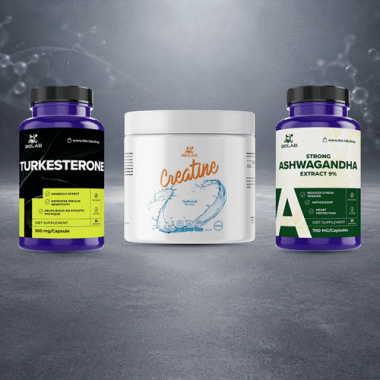 Turkesterone vs creatine vs ashwagandha: Men’s health & the evidence compared
10/15/2026Turkesterone, creatine and ashwagandha — what does the science really say? We compare their mechanisms of action,...Read more
-
 Nicotine withdrawal timeline: What recovers, and when
Posted in: Science Hub10/09/2026Nicotine receptor changes fully reverse in about three weeks. Brain imaging in people who quit shows receptor binding...Read more
Most read
-
 Simple and easy weight loss rules for women
Posted in: Diet10/26/2023The fight against excess weight can be long and arduous. The whole process requires not only self-discipline, but...Read more
-
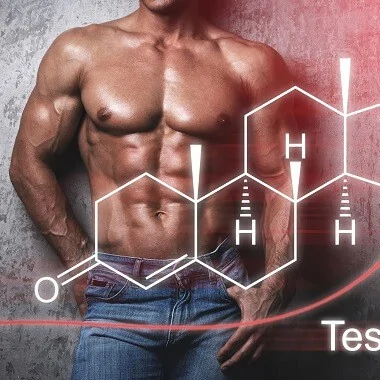 How to increase testosterone levels?
Testosterone is one of the most important male hormones responsible for many functions in the body. It affects, among...Read more
-
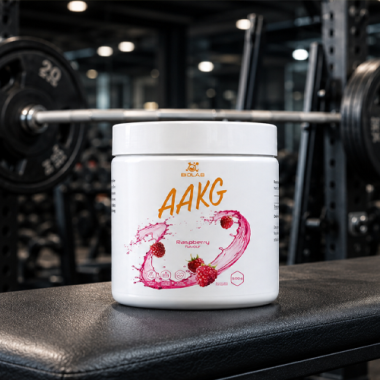 AAKG – facts and myths
Posted in: Tips10/26/2023AAKG, or L-arginine alpha-ketoglutarate, is a dietary supplement that is popular among physically active people...Read more
-
 Are you supplementing smart? 10 power combos for daily well-being
Posted in: Tips07/31/2025A supplement capsule can be more than just a dose of health - it can be a catalyst for deeper change. But did you...Read more
-
 Which supplements for weight loss - what's the best choice?
Posted in: Tips07/12/2023Weight loss is a process whose effectiveness depends on the calorie deficit developed. The most important issue is...Read more
-
 How to lose weight effectively?
Successful weight loss does not at all require sacrifices, catcalling at the gym and giving up all your favorite...Read more
Blog navigationExplore topics
Newsletter
Get a discount on your first order

Expert in supplementation and innovative health, fitness, and beauty solutions.

Offer
Offer Our company
Our company Contact
E-mail address
[email protected]
WhatsApp
+44 739 8562 456ⓒ 2026 Biolabshop. All rights reserved.
- Peptides Peptides
- Nootropics Nootropics
- Amino acids Amino acids