

-
- show all
-
Trending Now
- Amino acids Amino acids
-
- show all
-
Trending Now
- Nootropics Nootropics
-
- show all
-
Trending Now
- Peptides Peptides
-
- show all
-
- show all
-
Type
- show all
- 5-AMINO-1MQ
- THYMOSIN
- ACTH-1-39
- Adamax Peptide for Research
- AOD-9604
- ARG-BPC
- B7-33
- BPC-157
- BRONCHOGEN
- Show more
- CARDIOGEN
- CJC-1295
- CJC-DAC
- CORTAGEN
- DSIP
- EPITHALON
- GC-1-SOBETIROME
- GHK-CU Cosmetics & Supplements
- GHRP-6
- SELANK
- GLP-1
- GRF
- HGH: Top quality Human Growth Hormone
- HGH FRAGMENT 176-191
- IGF-1-LR3
- IGF-DES
- IPAMORELIN
- KISSPEPTIN
- KPV
- LARAZOTIDE ACETATE
- Lipotropin
- LL-37
- LIVAGEN
- MATRIXYL
- MELANOTAN
- MELANOTAN 2
- MOTS
- N-ACETYL
- OXYTOCIN
- P-21
- PANCRAGEN
- PEG-MGF
- PROSTAMAX
- PT-141
- RETATRUTIDE
- SEMAX
- SERMORELIN
- SLU-PP-332
- SNAP-8
- TB-500
- THROMBIN PEPTIDE TP508
- Thymogen Alpha-1
- Thymosin Alpha 1
- TRH
- VIP
- Sarms Sarms
- Cosmetics Cosmetics
-
- show all
-
Trending Now
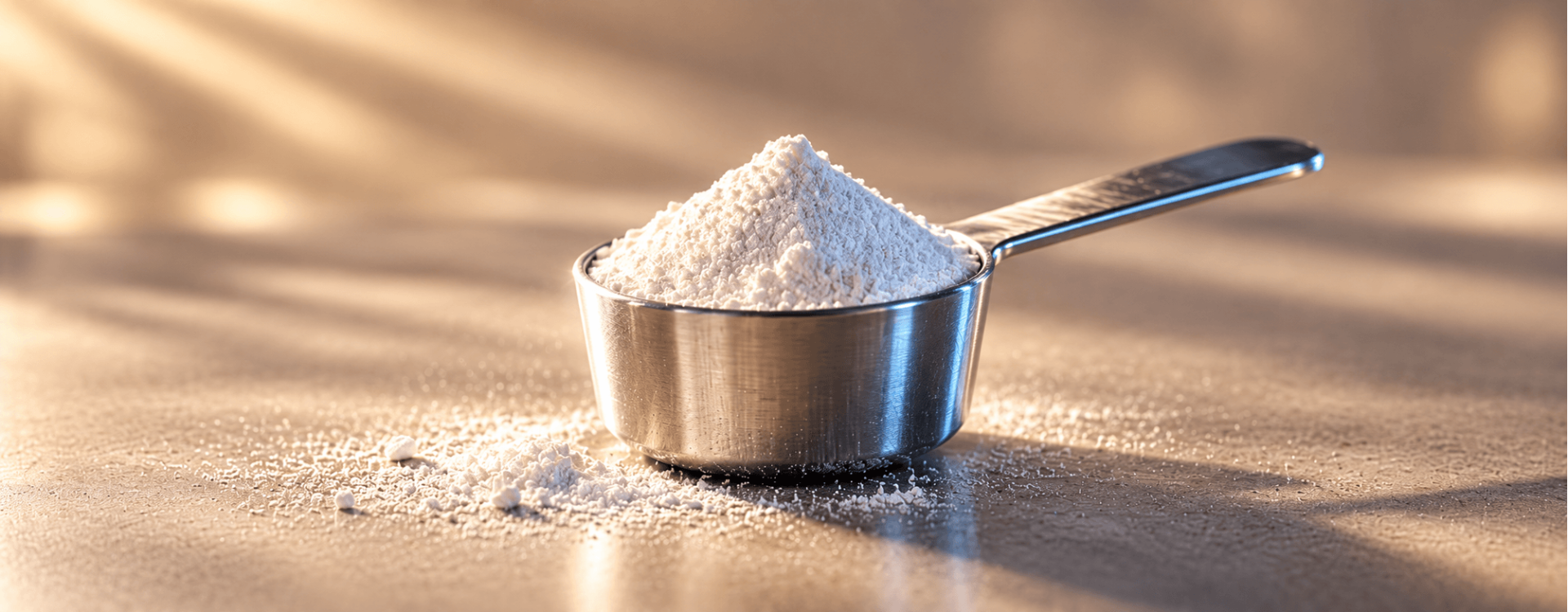
What does creatine do? It delivers energy, and 3 g a day gets You there
Posted on: 10/28/2026A loading phase of 20 g of creatine a day raises muscle creatine by about 20% in six days. A small dose of 3 g a day reaches the same 20% in about a month.
That finding changes how most people take creatine. But it also hints at something bigger: creatine is not really a muscle product at all.
Most people first meet creatine in a gym, on a shelf between protein powder and pre-workout.
So it carries the reputation of the room: something for lifters, for muscle, for bulk.
But the biology tells a quieter story. Creatine does not build energy. It moves it — from the place where energy is made to the place where it is spent. And the tissues that depend on that movement most are not only your biceps.
KEY TAKEAWAYS
- Creatine carries energy from the mitochondria to the parts of the cell that spend it.
- The system matters most in tissues whose energy demand is high and changes fast: skeletal muscle, the heart and the brain.
- Your body makes its own creatine, and doing so uses an estimated 40% of its supply of labile methyl groups.
- In a classic study, 3 g a day for 28 days raised muscle creatine by about 20% — the same rise a 20 g a day loading phase reached in 6 days.
- People with bipolar disorder should speak to their psychiatrist before taking creatine.
What does creatine actually do?
Every cell runs on ATP — adenosine triphosphate, the molecule your cells use as their energy currency.
ATP is made mostly inside the mitochondria, the small power plants of the cell.
But it is spent somewhere else: at the ion pumps that keep a nerve cell ready to fire, in the contracting fibres of a muscle, at the synapses where neurons talk to each other.
Something has to carry the energy across that distance. That is creatine’s job.
At the mitochondrion, creatine picks up a phosphate group and becomes phosphocreatine. Phosphocreatine travels to where energy is being used and hands that phosphate back to rebuild ATP on the spot. The empty creatine then returns for another load.
Biochemists call this the phosphocreatine circuit, and the enzyme that runs it is creatine kinase. It works as an energy buffer: it keeps ATP available at the exact moment a cell suddenly needs more of it (Wallimann et al, Biochem J 1992).
This is why creatine does not make your mitochondria "better". It makes what they produce arrive where it is needed.
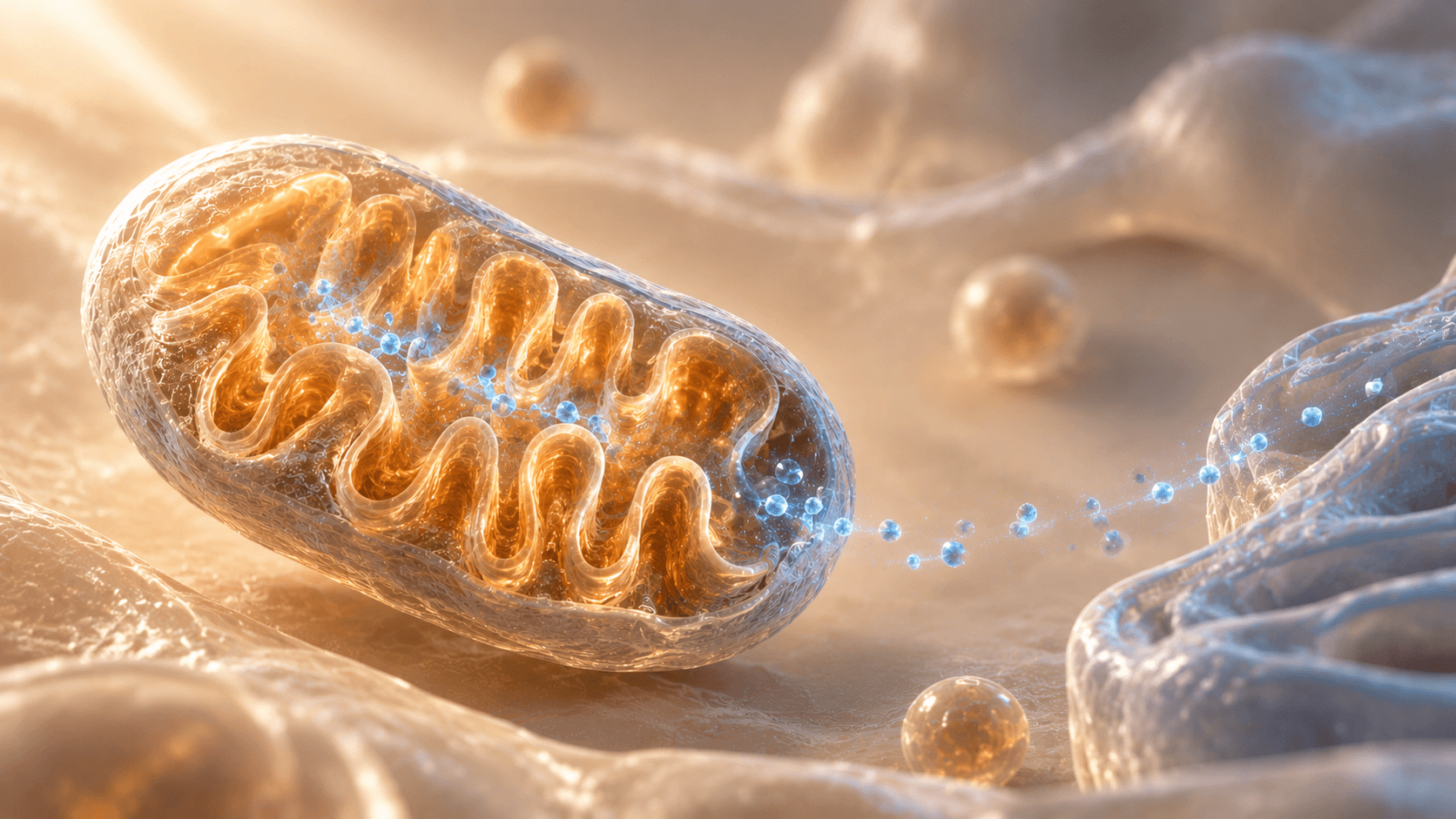
Where creatine matters most: muscle, heart and brain
The phosphocreatine circuit is most developed in tissues with high and fluctuating energy demands — tissues that can go from idle to maximum in a second.
- Muscle — rest, then everything at once.
- Heart — never stops, never idles.
- Brain — bursts of activity, then quiet.
These are the tissues with the highest creatine kinase activity and the largest phosphocreatine pools. This describes the anatomy of an energy transport system. It is not a claim that a supplement improves any of these organs.
Your body already makes creatine — and it pays for it
Creatine is not foreign to the body. You make it yourself, mainly from three amino acids: glycine, arginine and methionine.
The last step needs a methyl group — a tiny chemical tag made of one carbon and three hydrogens. Your body attaches methyl groups to DNA, hormones and neurotransmitters to switch processes on and off, and it has only a limited supply to spend.
Creatine synthesis is one of the largest single users of that supply. It accounts for an estimated 40% of all labile methyl groups provided by S-adenosylmethionine (SAM), the body’s main methyl donor (Brosnan et al, Amino Acids 2011). The authors give it as an approximation, and note it places "an appreciable burden" on methyl group supply.
The body needs a steady supply because creatine breaks down every day into creatinine, which leaves in the urine. In men aged 20 to 39 weighing about 70 kg, that loss averages around 2 g a day. It is lower in women and in older adults, who have less muscle (Brosnan et al, Amino Acids 2011).
In people who eat meat and fish, food replaces roughly half of that loss. Creatine is found only in animal foods, so vegetarians and vegans must make almost all of theirs themselves.
For scale: 5 g of creatine is the amount in roughly 1.1 kg of fresh, uncooked steak (Harris et al, Clin Sci 1992).
Your body already spends a fortune on creatine. It just does it quietly.
How much creatine per day? Do you need a loading phase?
The best-known answer comes from a 1996 study of 31 men who took creatine on different schedules while researchers measured the creatine content of their muscle (Hultman et al, J Appl Physiol 1996).
Protocol Daily amount Result for muscle total creatine Loading phase 20 g a day for 6 days About +20% Small daily dose 3 g a day for 28 days About +20%, reached more gradually Maintenance after loading 2 g a day for 30 more days Raised level held Stopping after loading None Back to the starting level about 30 days later A loading phase gets you there in a week. A small daily dose gets you to the same place in a month. The authors concluded that 3 g a day is, over the long term, likely to be as effective at raising tissue levels as the higher dose.
Two honest limits to keep in mind:
- Every participant in this study was a man. The same timeline has not been measured this way in women.
- People do not all start from the same level. An earlier study found the rise was largest in those whose muscle creatine was lowest to begin with (Harris et al, Clin Sci 1992).
These are study protocols, not a personal dose. How much is right for you is a conversation for your doctor.
Monohydrate and micronised: what the words mean
Creatine monohydrate is creatine bound to one molecule of water. It is the form used in every study described in this article.
Micronised means the powder is milled into finer particles, so it mixes more easily into water or a drink.
Who should speak to a doctor first
Bipolar disorder
Creatine has triggered hypomania and mania — periods of abnormally elevated mood and energy — in people with bipolar depression.
In a small open study of creatine for treatment-resistant depression, both participants with bipolar disorder developed hypomania or mania (Roitman et al, Bipolar Disord 2007).
In a later randomised, placebo-controlled trial in bipolar depression, two of the seventeen people taking creatine switched to hypomania or mania early in the trial (Toniolo et al, J Neural Transm 2018).
So the message is not "never". It is "not without your psychiatrist". If you live with bipolar disorder, discuss creatine with your psychiatrist before you start.
Other situations
Pregnancy and breastfeeding, regular medication and kidney disease are also reasons to talk to your doctor before taking any supplement, creatine included.
What the research does not show
- The dosing timeline comes from a study in men only. It has not been measured the same way in women.
- The 40% methyl-group figure is an approximation, not a single direct measurement.
- The phosphocreatine circuit explains where creatine works. It does not show that taking more creatine improves the heart or the brain.
- The bipolar findings come from small numbers of people: two patients in an open study and two in a randomised trial. They are a reason for caution, not a measure of how often it happens.
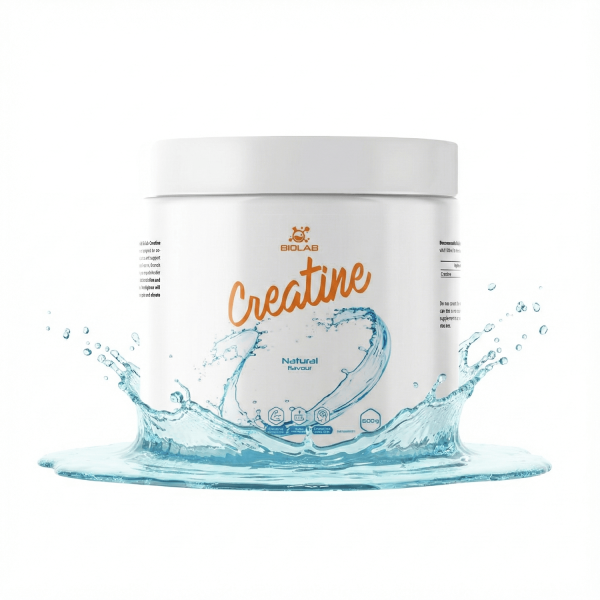
BIOLAB Creatine
BIOLAB Creatine is micronised creatine monohydrate — one ingredient, nothing else in the natural version.
- 500 g of powder
- Natural version: 5,000 mg creatine monohydrate per 5 g serving
- Flavoured versions (pineapple, watermelon, blackcurrant): 4,500 mg creatine monohydrate per 5 g serving
Creatine increases physical performance in successive bursts of short-term, high-intensity exercise. The beneficial effect is obtained with a daily intake of 3 g of creatine.
Shop BIOLAB Creatine, micronised creatine monohydrate 500 g
A food supplement should not be used as a substitute for a varied diet. Do not exceed the recommended daily dose. Keep out of the reach of children.
References
- Wallimann et al. Biochem J. 1992. PMID 1731757
https://pubmed.ncbi.nlm.nih.gov/1731757/ - Brosnan et al. Amino Acids. 2011. PMID 21387089
https://pubmed.ncbi.nlm.nih.gov/21387089/ - Harris et al. Clin Sci. 1992. PMID 1327657
https://pubmed.ncbi.nlm.nih.gov/1327657/ - Hultman et al. J Appl Physiol. 1996. PMID 8828669
https://pubmed.ncbi.nlm.nih.gov/8828669/ - Roitman et al. Bipolar Disord. 2007. PMID 17988366
https://pubmed.ncbi.nlm.nih.gov/17988366/ - Toniolo et al. J Neural Transm. 2018. PMID 29177955
https://pubmed.ncbi.nlm.nih.gov/29177955/
Disclaimer: This article is educational content about published research. It is not medical advice and not a diagnosis. The author is a researcher and neuroscience student, not a medical doctor. Consult a doctor before changing supplements, especially if you have a medical condition or take medication.
From the very beginning of her cooperation with Biolabshop, Aleksandra Duba has combined professionalism with deep scientific commitment. In the past, she was a physique sports competitor, and her achievements include, among others, an Overall victory at the Olympia Amateur in Italy, which opened her way to the IFBB PRO professional league, as well as a 2nd place at the Arnold Sports Festival in Great Britain and the Polish Championship in 2022.
Her passion for sport and a healthy lifestyle has lasted over ten years. During this time, she systematically and consistently expanded her competencies in the field of dietetics, training, biohacking, and functional medicine, focusing on the practical application of scientific discoveries. Her core interests include the prevention of metabolic and hormonal diseases, anti-aging, and healthspan—the pursuit of maintaining a high quality of life and vitality in the long run.
[readmore]
What does Aleksandra do?
As part of the cooperation, she co-creates the brand's offer and systematically develops scientific competencies, sharing knowledge on her social media profile. She publishes content showing a unique approach to biological issues and materials tailored to audiences with diverse levels of expertise. She also considers the latest scientific reports on products currently in laboratory research phases, including peptides. She encourages the exploration of both basic and advanced aspects of supplementation.
Why is it worth following her progress?
From the perspective of her commitment to a personalized approach, she strives to maximize effects, placing particular emphasis on the holistic nature of well-being. The physical and mental spheres interact in synergy, which opens up infinite possibilities for development and self-improvement.
Choose proven solutions:
Latest articles
-
 Is Turkesterone a Steroid? What It Actually Is
11/12/2026Chemically, a steroid is any compound built on the cyclopentanoperhydrophenanthrene ring system. Cholesterol is a...Read more
-
 Olive oil and brain health: What the research really shows
11/10/2026Some of the most interesting substances in brain-health research do not come in a capsule. One of them has been...Read more
-
 Does nicotine affect sleep? What one controlled study measured
Posted in: Science Hub10/16/2026Yes, and the size of the effect is larger than most people expect. In a controlled crossover study, a single...Read more
-
 Turkesterone vs creatine vs ashwagandha: Men’s health & the evidence compared
10/15/2026Turkesterone, creatine and ashwagandha — what does the science really say? We compare their mechanisms of action,...Read more
-
 What is paraxanthine, and where does it come from?
Posted in: Science Hub10/13/2026Most descriptions of paraxanthine begin by calling it a caffeine metabolite and move on. That phrasing undersells the...Read more
-
 Nicotine withdrawal timeline: What recovers, and when
Posted in: Science Hub10/09/2026Nicotine receptor changes fully reverse in about three weeks. Brain imaging in people who quit shows receptor binding...Read more
Most read
-
 Simple and easy weight loss rules for women
Posted in: Diet10/26/2023The fight against excess weight can be long and arduous. The whole process requires not only self-discipline, but...Read more
-
 How to increase testosterone levels?
Testosterone is one of the most important male hormones responsible for many functions in the body. It affects, among...Read more
-
 AAKG – facts and myths
Posted in: Tips10/26/2023AAKG, or L-arginine alpha-ketoglutarate, is a dietary supplement that is popular among physically active people...Read more
-
 Are you supplementing smart? 10 power combos for daily well-being
Posted in: Tips07/31/2025A supplement capsule can be more than just a dose of health - it can be a catalyst for deeper change. But did you...Read more
-
 Which supplements for weight loss - what's the best choice?
Posted in: Tips07/12/2023Weight loss is a process whose effectiveness depends on the calorie deficit developed. The most important issue is...Read more
-
 How to lose weight effectively?
Successful weight loss does not at all require sacrifices, catcalling at the gym and giving up all your favorite...Read more
Blog navigationExplore topics
Newsletter
Get a discount on your first order

Expert in supplementation and innovative health, fitness, and beauty solutions.

Offer
Offer Our company
Our company Contact
E-mail address
[email protected]
WhatsApp
+44 739 8562 456ⓒ 2026 Biolabshop. All rights reserved.
- Peptides Peptides
- Nootropics Nootropics
- Amino acids Amino acids