

-
- show all
-
Trending Now
- Amino acids Amino acids
-
- show all
-
Trending Now
- Nootropics Nootropics
-
- show all
-
Trending Now
- Peptides Peptides
-
- show all
-
- show all
-
Type
- show all
- 5-AMINO-1MQ
- THYMOSIN
- ACTH-1-39
- Adamax Peptide for Research
- AOD-9604
- ARG-BPC
- B7-33
- BPC-157
- BRONCHOGEN
- Show more
- CARDIOGEN
- CJC-1295
- CJC-DAC
- CORTAGEN
- DSIP
- EPITHALON
- GC-1-SOBETIROME
- GHK-CU Cosmetics & Supplements
- GHRP-6
- SELANK
- GLP-1
- GRF
- HGH: Top quality Human Growth Hormone
- HGH FRAGMENT 176-191
- IGF-1-LR3
- IGF-DES
- IPAMORELIN
- KISSPEPTIN
- KPV
- LARAZOTIDE ACETATE
- Lipotropin
- LL-37
- LIVAGEN
- MATRIXYL
- MELANOTAN
- MELANOTAN 2
- MOTS
- N-ACETYL
- OXYTOCIN
- P-21
- PANCRAGEN
- PEG-MGF
- PROSTAMAX
- PT-141
- RETATRUTIDE
- SEMAX
- SERMORELIN
- SLU-PP-332
- SNAP-8
- TB-500
- THROMBIN PEPTIDE TP508
- Thymogen Alpha-1
- Thymosin Alpha 1
- TRH
- VIP
- Sarms Sarms
- Cosmetics Cosmetics
-
- show all
-
Trending Now
Nicotine withdrawal timeline: What recovers, and when
Posted on: 10/09/2026Nicotine receptor changes fully reverse in about three weeks. Brain imaging in people who quit shows receptor binding peaking around day 10 of abstinence — higher than when they were using — then returning to non-user levels by day 21. Withdrawal symptoms peak in the first week and resolve over two to four weeks. This is a short, defined process with an endpoint, which is not how it feels from inside week one.
The measured timeline
Most withdrawal timelines online are assembled from anecdote. This one is not.
Days 1–3. Symptoms build. Irritability, difficulty concentrating, restlessness, increased appetite and disturbed sleep are the well-validated ones [2].
Week 1. The peak. This is when symptoms are most intense, and the point at which most attempts fail. It is also short.
Around day 10. The counterintuitive part: receptor binding is at its highest — imaging shows it peaking at 25.7% above non-smoker levels — before it starts to fall [1]. If the second week feels harder than you expected, this is a plausible reason, and it is a sign of the process working, not failing.
Day 21. Receptor binding has returned to non-smoker levels [1]. Your receptor population has reset.
Weeks 2–4. Withdrawal symptoms resolve across this window [2]. Cravings triggered by cues and situations can persist longer, but they are a different phenomenon from the physiological withdrawal.
Three weeks is a manageable number. It is worth knowing before you start, because “how long will this last” is the question that decides most attempts.
You were never nicotine-deficient
Worth stating plainly, because a surprising amount of marketing implies otherwise.
Your body does not produce nicotine. There is no physiological requirement for it, no deficiency state, and no lab test for it. Nothing goes wrong in a person who has never encountered it.
Trace amounts do occur in tomatoes, aubergine and tea. They are pharmacologically irrelevant: total dietary intake is around 1.4 micrograms a day, against 3–6 milligrams in a single pouch. That is a factor of roughly four thousand.
Whatever withdrawal feels like, it is not the correction of a nutritional shortfall.
“You’re not nicotine-deficient, you’re acetylcholine-deficient”
This is the most popular counter-narrative in the space, and it deserves a careful answer, because parts of it are genuinely good and parts of it are a hypothesis wearing a lab coat.
The argument runs: nicotine feels good because it mimics acetylcholine at your receptors, so if nicotine helps you, you must be short on acetylcholine — supply the precursors and you will not need the nicotine.
What holds up
The choline data is real and it is striking. Analysis of US national nutrition data found only 8.03% of adults meet the Adequate Intake for choline — falling to 2.43% among people who do not eat eggs [3]. Choline intake in the general population genuinely is low.
The biochemistry is correct. Choline and acetyl-CoA are the substrates your body uses to build acetylcholine. That is textbook and not in dispute.
Nicotine really does act on the acetylcholine system. It is a structural mimic binding to acetylcholine’s own receptors. The framing is not invented.
What does not hold up
“Acetylcholine deficiency” is not a measurable clinical state. No blood test establishes it. And falling below an Adequate Intake is not the same as being deficient — an AI is a population benchmark set where the data is insufficient to define a firm requirement, not a threshold below which deficiency begins. Overt choline deficiency is genuinely rare in free-living adults.
Choline supply is not the bottleneck. The rate-limiting step in producing acetylcholine at a nerve terminal is high-affinity choline transport into the cell, not the availability of raw choline or the enzyme that assembles it. Adding more substrate does not necessarily move a step that is not rate-limiting.
Four specific claims circulating in this space are not supported:
- That elevated homocysteine directly inhibits ChAT, the acetylcholine-building enzyme. There is no enzyme-kinetic evidence for this. The actual rodent data show elevated acetylcholinesterase — a different enzyme, on the opposite arm of the pathway.
- That the APOE4 gene variant reduces ChAT activity from birth. This traces to a single 1995 study measuring post-mortem brain tissue from elderly Alzheimer’s patients. ChAT activity is an autopsy measurement; no dataset on ChAT at birth by genotype exists.
- That chronic inflammation depletes your acetylcholine. The established relationship runs the other way — vagal acetylcholine acting on α7 receptors suppresses inflammation [6]. No study shows chronic inflammation depleting human acetylcholine.
- That viral spike protein blocks nicotinic receptors. This was directly tested in 2022 with competitive binding assays and patch-clamp electrophysiology on human receptors, and came back negative [5]. (In fairness, a 2023 paper reported the opposite result, so the question is contested rather than closed — but it is certainly not established fact.)
Each of these is a plausible-sounding mechanism inserted where an established one is missing. They are worth recognising, because they are the load-bearing claims under a lot of supplement marketing.
About alpha-GPC
Alpha-GPC is the most commonly recommended acetylcholine precursor supplement, and there are two things a consumer should know before buying it.
The efficacy evidence is in the wrong population. The favourable meta-analysis pooled studies conducted almost entirely in patients with Alzheimer’s disease or cerebrovascular disease. There is very little evidence in healthy adults, and citicoline’s evidence base in healthy populations is graded very low quality.
There is a safety signal that is usually omitted. A South Korean national cohort study covering over 12 million adults aged 50+ found alpha-GPC users had a dose-dependent adjusted hazard ratio of 1.43 for stroke over ten years [4].
That is observational data, and confounding by indication is the obvious alternative explanation — alpha-GPC is prescribed in Korea for cognitive complaints, which are themselves sometimes early signs of cerebrovascular disease. Later Korean claims analyses did not reproduce the finding. So this is not proof of harm.
But it is a large study reporting a dose-response relationship, and it should not be quietly left out of a consumer recommendation. If you are over 50 or have cardiovascular risk factors, this is worth raising with your doctor rather than deciding alone.
One more: huperzine A is not a nutrient. It is a reversible acetylcholinesterase inhibitor — pharmacologically the same class of drug as donepezil, an Alzheimer’s medication — sold without a prescriber. Cochrane found inadequate evidence to make any recommendation on it.
What actually helps
The unglamorous answers keep outperforming the interesting ones.
Protect your sleep first. Nicotine costs roughly 100 minutes of sleep a night [7], and sleep disruption during withdrawal is temporary but real. Sleep is also the process that does most of what people are hoping the supplement will do. The sleep data is here.
Eat choline rather than supplement it. Eggs, liver, fish and meat are the dense sources, and the egg finding is the clearest signal in the data: 57.3% of egg consumers meet the Adequate Intake, against 2.43% of non-consumers [3]. Two eggs is not a biohack. It is just the answer.
Know your three weeks. Receptor recovery is measured at 21 days [1]. Marking that on a calendar converts an open-ended ordeal into a defined one, and the point at which most people quit — the second week — is precisely when the underlying measurement says the process is turning.
Get support for the hard part. Nicotine dependence establishes itself faster than almost anyone expects — in prospective data, 10% of young people lost autonomy over their use within two days of first inhaling [8]. Something that arrives that fast is not a willpower failure when it proves hard to reverse. Licensed cessation support exists and works.
Frequently asked questions
How long does nicotine withdrawal last? Symptoms peak in the first week and resolve over two to four weeks [2]. Receptor changes normalise by day 21 [1]. Cue-triggered cravings can persist longer but are psychological rather than physiological.
How long does it take for nicotine receptors to return to normal? About 21 days of complete abstinence, measured by brain imaging. Binding actually peaks around day 10 before falling [1].
What is the hardest day of quitting nicotine? Symptoms are most intense in the first week. Many people also report a difficult second week, which coincides with peak receptor binding around day 10 [1].
Do acetylcholine supplements help you quit nicotine? No trial has tested this. The precursor argument is biologically coherent but rests on a deficiency state that is not clinically measurable, and the efficacy evidence for alpha-GPC comes almost entirely from patients with dementia, not healthy adults quitting nicotine.
Is alpha-GPC safe? A cohort of 12 million Korean adults found a dose-dependent association with stroke over ten years (adjusted HR 1.43) [4]. The study is observational and later analyses did not reproduce it, but it is worth discussing with a doctor, particularly over 50.
Will my brain fully recover from nicotine? The receptor changes reverse in three weeks [1]. That is the specific claim the imaging supports.
This article is for education and does not constitute medical advice. If you are quitting nicotine and finding it difficult, licensed cessation support is effective and worth using. Always consult a healthcare professional before starting or stopping any supplement or medication.
Bibliography
- Mamede M, Ishizu K, Ueda M, et al. Temporal change in human nicotinic acetylcholine receptor after smoking cessation: 5IA SPECT study. J Nucl Med. 2007;48(11):1829–35. PMID: 17942810. doi:10.2967/jnumed.107.043471
https://doi.org/10.2967/jnumed.107.043471 - Hughes JR. Effects of abstinence from tobacco: valid symptoms and time course. Nicotine Tob Res. 2007;9(3):315–27. PMID: 17365764. doi:10.1080/14622200701188919
https://doi.org/10.1080/14622200701188919 - Wallace TC, Fulgoni VL 3rd. Usual choline intakes are associated with egg and protein food consumption in the United States. Nutrients. 2017;9(8):839. PMID: 28783055. doi:10.3390/nu9080839
https://doi.org/10.3390/nu9080839 - Lee G, Choi S, Chang J, et al. Association of L-α glycerylphosphorylcholine with subsequent stroke risk after 10 years. JAMA Netw Open. 2021;4(11):e2136008. PMID: 34817582. doi:10.1001/jamanetworkopen.2021.36008
https://doi.org/10.1001/jamanetworkopen.2021.36008 - Godellas NE, Cymes GD, Grosman C. An experimental test of the nicotinic hypothesis of COVID-19. PNAS. 2022;119(44):e2204242119. PMID: 36279466. doi:10.1073/pnas.2204242119
https://doi.org/10.1073/pnas.2204242119 - Wang H, Yu M, Ochani M, et al. Nicotinic acetylcholine receptor α7 subunit is an essential regulator of inflammation. Nature. 2003;421(6921):384–8. PMID: 12508119. doi:10.1038/nature01339
https://doi.org/10.1038/nature01339 - Choi JB, Lee YJG, Jeong DU. Transdermal nicotine patch effects on EEG power spectra and heart rate variability during sleep of healthy male adults. Psychiatry Investig. 2017;14(4):499–505. PMID: 28845178. doi:10.4306/pi.2017.14.4.499
https://doi.org/10.4306/pi.2017.14.4.499 - DiFranza JR, Savageau JA, Fletcher K, et al. Symptoms of tobacco dependence after brief intermittent use: the DANDY-2 Study. Arch Pediatr Adolesc Med. 2007;161(7):704–10. PMID: 17606835. doi:10.1001/archpedi.161.7.704
https://doi.org/10.1001/archpedi.161.7.704
Posted in: Science HubFrom the very beginning of her cooperation with Biolabshop, Aleksandra Duba has combined professionalism with deep scientific commitment. In the past, she was a physique sports competitor, and her achievements include, among others, an Overall victory at the Olympia Amateur in Italy, which opened her way to the IFBB PRO professional league, as well as a 2nd place at the Arnold Sports Festival in Great Britain and the Polish Championship in 2022.
Her passion for sport and a healthy lifestyle has lasted over ten years. During this time, she systematically and consistently expanded her competencies in the field of dietetics, training, biohacking, and functional medicine, focusing on the practical application of scientific discoveries. Her core interests include the prevention of metabolic and hormonal diseases, anti-aging, and healthspan—the pursuit of maintaining a high quality of life and vitality in the long run.
[readmore]
What does Aleksandra do?
As part of the cooperation, she co-creates the brand's offer and systematically develops scientific competencies, sharing knowledge on her social media profile. She publishes content showing a unique approach to biological issues and materials tailored to audiences with diverse levels of expertise. She also considers the latest scientific reports on products currently in laboratory research phases, including peptides. She encourages the exploration of both basic and advanced aspects of supplementation.
Why is it worth following her progress?
From the perspective of her commitment to a personalized approach, she strives to maximize effects, placing particular emphasis on the holistic nature of well-being. The physical and mental spheres interact in synergy, which opens up infinite possibilities for development and self-improvement.
Choose proven solutions:
Latest articles
-
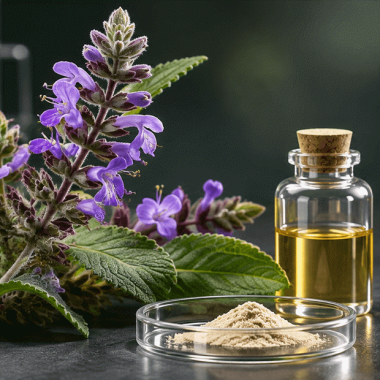 Is Turkesterone a Steroid? What It Actually Is
11/12/2026Chemically, a steroid is any compound built on the cyclopentanoperhydrophenanthrene ring system. Cholesterol is a...Read more
-
 Olive oil and brain health: What the research really shows
11/10/2026Some of the most interesting substances in brain-health research do not come in a capsule. One of them has been...Read more
-
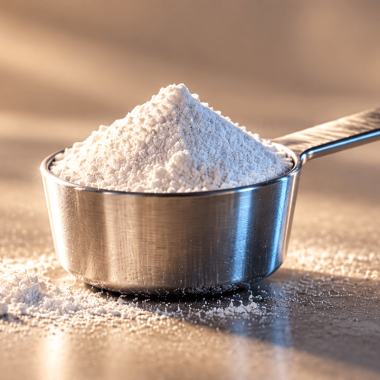 What does creatine do? It delivers energy, and 3 g a day gets You there
10/28/2026A loading phase of 20 g of creatine a day raises muscle creatine by about 20% in six days. A small dose of 3 g a day...Read more
-
 Does nicotine affect sleep? What one controlled study measured
Posted in: Science Hub10/16/2026Yes, and the size of the effect is larger than most people expect. In a controlled crossover study, a single...Read more
-
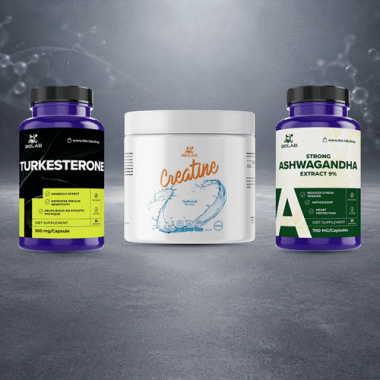 Turkesterone vs creatine vs ashwagandha: Men’s health & the evidence compared
10/15/2026Turkesterone, creatine and ashwagandha — what does the science really say? We compare their mechanisms of action,...Read more
-
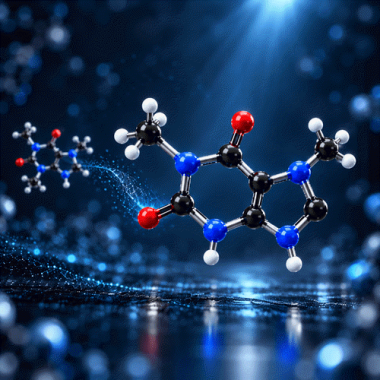 What is paraxanthine, and where does it come from?
Posted in: Science Hub10/13/2026Most descriptions of paraxanthine begin by calling it a caffeine metabolite and move on. That phrasing undersells the...Read more
Most read
-
 Simple and easy weight loss rules for women
Posted in: Diet10/26/2023The fight against excess weight can be long and arduous. The whole process requires not only self-discipline, but...Read more
-
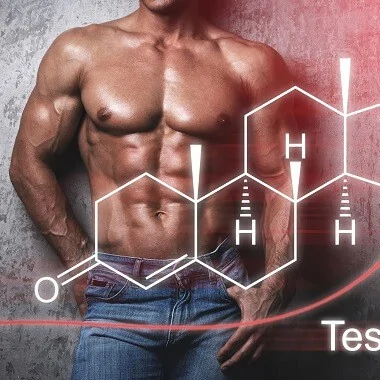 How to increase testosterone levels?
Testosterone is one of the most important male hormones responsible for many functions in the body. It affects, among...Read more
-
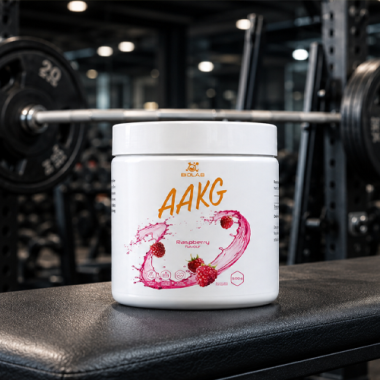 AAKG – facts and myths
Posted in: Tips10/26/2023AAKG, or L-arginine alpha-ketoglutarate, is a dietary supplement that is popular among physically active people...Read more
-
 Are you supplementing smart? 10 power combos for daily well-being
Posted in: Tips07/31/2025A supplement capsule can be more than just a dose of health - it can be a catalyst for deeper change. But did you...Read more
-
 Which supplements for weight loss - what's the best choice?
Posted in: Tips07/12/2023Weight loss is a process whose effectiveness depends on the calorie deficit developed. The most important issue is...Read more
-
 How to lose weight effectively?
Successful weight loss does not at all require sacrifices, catcalling at the gym and giving up all your favorite...Read more
Blog navigationExplore topics
Newsletter
Get a discount on your first order

Expert in supplementation and innovative health, fitness, and beauty solutions.

Offer
Offer Our company
Our company Contact
E-mail address
[email protected]
WhatsApp
+44 739 8562 456ⓒ 2026 Biolabshop. All rights reserved.
- Peptides Peptides
- Nootropics Nootropics
- Amino acids Amino acids