

-
- show all
-
Trending Now
- Amino acids Amino acids
-
- show all
-
Trending Now
- Nootropics Nootropics
-
- show all
-
Trending Now
- Peptides Peptides
-
- show all
-
- show all
-
Type
- show all
- 5-AMINO-1MQ
- THYMOSIN
- ACTH-1-39
- Adamax Peptide for Research
- AOD-9604
- ARG-BPC
- B7-33
- BPC-157
- BRONCHOGEN
- Show more
- CARDIOGEN
- CJC-1295
- CJC-DAC
- CORTAGEN
- DSIP
- EPITHALON
- GC-1-SOBETIROME
- GHK-CU Cosmetics & Supplements
- GHRP-6
- SELANK
- GLP-1
- GRF
- HGH: Top quality Human Growth Hormone
- HGH FRAGMENT 176-191
- IGF-1-LR3
- IGF-DES
- IPAMORELIN
- KISSPEPTIN
- KPV
- LARAZOTIDE ACETATE
- Lipotropin
- LL-37
- LIVAGEN
- MATRIXYL
- MELANOTAN
- MELANOTAN 2
- MOTS
- N-ACETYL
- OXYTOCIN
- P-21
- PANCRAGEN
- PEG-MGF
- PROSTAMAX
- PT-141
- RETATRUTIDE
- SEMAX
- SERMORELIN
- SLU-PP-332
- SNAP-8
- TB-500
- THROMBIN PEPTIDE TP508
- Thymogen Alpha-1
- Thymosin Alpha 1
- TRH
- VIP
- Sarms Sarms
- Cosmetics Cosmetics
-
- show all
-
Trending Now

Five real ways to raise cysteine in the body
Posted on: 07/14/2026There's more than one lever for raising your body's cysteine supply — and knowing which one to pull changes the outcome.
Cysteine is not a single-source nutrient. It can reach your cells through at least five distinct routes — dietary, internal synthesis, targeted supplementation, cellular recycling, and metabolic pairing — and each one operates through a genuinely different mechanism. Understanding which lever you are actually pulling matters, because they are not interchangeable, and combining more than one is usually more effective than relying on any single approach alone.
1. Eat it directly
Whey protein is one of the richest natural sources of cysteine, carried mostly as cystine, its bonded form. A foundational study found that animals fed undenatured, minimally heated whey protein developed significantly higher tissue glutathione levels than animals fed heat-damaged whey or casein. The catch is thermal: cysteine's sulfur bonds are fragile, and whey protein begins losing its native structure above roughly 60 to 70°C, which is why heavily processed or heat-treated protein sources deliver noticeably less usable cysteine than their label might suggest.
2. Make it internally
The body can convert the essential amino acid methionine, abundant in meat, fish, and eggs, into cysteine through a metabolic pathway called transsulfuration. This conversion route is strictly dependent on vitamin B6 in its active form, with vitamin B12 and folate keeping the surrounding methylation cycle balanced, and magnesium supplying the cellular energy the pathway's enzymatic steps require. Without adequate B6 specifically, this entire internal production route stalls, regardless of how much methionine is available.
3. Supplement with a stable form
Free-form L-cysteine oxidizes quickly in the gut and absorbs poorly, making it a relatively inefficient supplement choice on its own. N-acetylcysteine, or NAC, solves this stability problem: its acetyl group shields the cysteine molecule through digestion, and it is only cleaved in the liver, where it releases usable cysteine into circulation. This is the main reason NAC, rather than plain cysteine, has become the standard research and supplement form.
4. Recycle what's already trapped
Under cellular stress, cysteine already inside the cell can oxidize and clump into cystine within lysosomes, where it becomes effectively locked away and, in excess, toxic. Cysteamine, generated naturally in the body from pantethine, the active form of vitamin B5, breaks this clump apart through a chemical exchange reaction, releasing usable free cysteine back into circulation while flushing the remainder out of the cell. This recycling pathway is best documented in cystinosis, a rare genetic disorder, but the underlying chemistry operates more broadly.
5. Pair it with glycine
Glutathione synthesis requires both cysteine and glycine in adequate supply, and glycine itself can become limiting, particularly with age. Research combining the two nutrients, known as GlyNAC supplementation, has consistently shown more complete correction of glutathione deficiency in clinical trials than cysteine-focused strategies alone, suggesting that pairing rather than isolating these nutrients produces the strongest outcome.
Sources
- Bounous, G., & Gold, P. (1991). Biological activity of undenatured dietary whey proteins: role of glutathione.
https://pubmed.ncbi.nlm.nih.gov/1782728/ - Pharmacokinetic profile and bioavailability of enteral N-acetylcysteine.
https://www.ncbi.nlm.nih.gov/pmc/articles/PMC8620940/ - Besouw, M., et al. Pantethine and cystamine deplete cystine via cysteamine-cysteine mixed disulfide efflux.
https://www.jci.org/articles/view/111436 - Sekhar, R. V., et al. (2011). Deficient synthesis of glutathione underlies oxidative stress in aging.
https://pmc.ncbi.nlm.nih.gov/articles/PMC3155927/ - Kumar, P., et al. (2021). GlyNAC supplementation in older adults: pilot clinical trial.
https://pmc.ncbi.nlm.nih.gov/articles/PMC8002905/
This article is for informational and educational purposes only. It should not be used as a substitute for professional medical advice, diagnosis, or treatment. Always consult a qualified healthcare provider if you have any health concerns.
From the very beginning of her cooperation with Biolabshop, Aleksandra Duba has combined professionalism with deep scientific commitment. In the past, she was a physique sports competitor, and her achievements include, among others, an Overall victory at the Olympia Amateur in Italy, which opened her way to the IFBB PRO professional league, as well as a 2nd place at the Arnold Sports Festival in Great Britain and the Polish Championship in 2022.
Her passion for sport and a healthy lifestyle has lasted over ten years. During this time, she systematically and consistently expanded her competencies in the field of dietetics, training, biohacking, and functional medicine, focusing on the practical application of scientific discoveries. Her core interests include the prevention of metabolic and hormonal diseases, anti-aging, and healthspan—the pursuit of maintaining a high quality of life and vitality in the long run.
[readmore]
What does Aleksandra do?
As part of the cooperation, she co-creates the brand's offer and systematically develops scientific competencies, sharing knowledge on her social media profile. She publishes content showing a unique approach to biological issues and materials tailored to audiences with diverse levels of expertise. She also considers the latest scientific reports on products currently in laboratory research phases, including peptides. She encourages the exploration of both basic and advanced aspects of supplementation.
Why is it worth following her progress?
From the perspective of her commitment to a personalized approach, she strives to maximize effects, placing particular emphasis on the holistic nature of well-being. The physical and mental spheres interact in synergy, which opens up infinite possibilities for development and self-improvement.
Choose proven solutions:
Latest articles
-
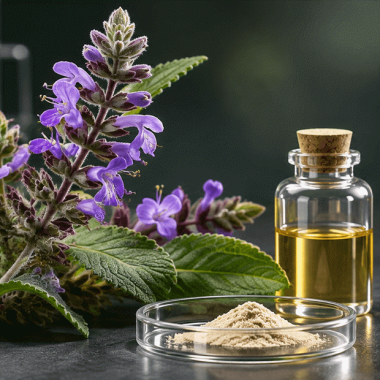 Is Turkesterone a Steroid? What It Actually Is
11/12/2026Chemically, a steroid is any compound built on the cyclopentanoperhydrophenanthrene ring system. Cholesterol is a...Read more
-
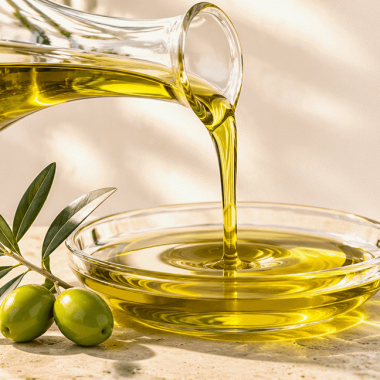 Olive oil and brain health: What the research really shows
11/10/2026Some of the most interesting substances in brain-health research do not come in a capsule. One of them has been...Read more
-
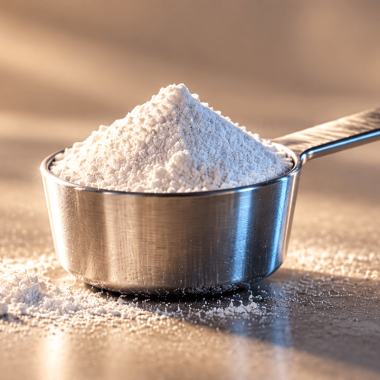 What does creatine do? It delivers energy, and 3 g a day gets You there
10/28/2026A loading phase of 20 g of creatine a day raises muscle creatine by about 20% in six days. A small dose of 3 g a day...Read more
-
 Does nicotine affect sleep? What one controlled study measured
Posted in: Science Hub10/16/2026Yes, and the size of the effect is larger than most people expect. In a controlled crossover study, a single...Read more
-
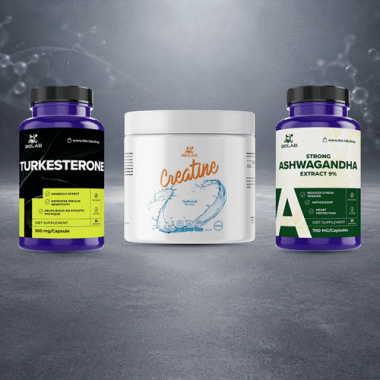 Turkesterone vs creatine vs ashwagandha: Men’s health & the evidence compared
10/15/2026Turkesterone, creatine and ashwagandha — what does the science really say? We compare their mechanisms of action,...Read more
-
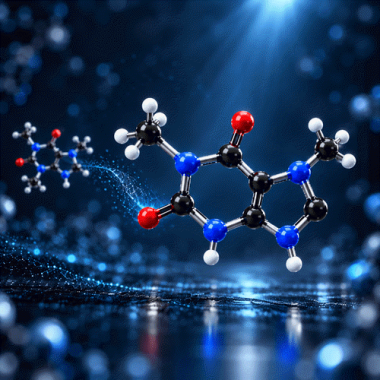 What is paraxanthine, and where does it come from?
Posted in: Science Hub10/13/2026Most descriptions of paraxanthine begin by calling it a caffeine metabolite and move on. That phrasing undersells the...Read more
Most read
-
 Simple and easy weight loss rules for women
Posted in: Diet10/26/2023The fight against excess weight can be long and arduous. The whole process requires not only self-discipline, but...Read more
-
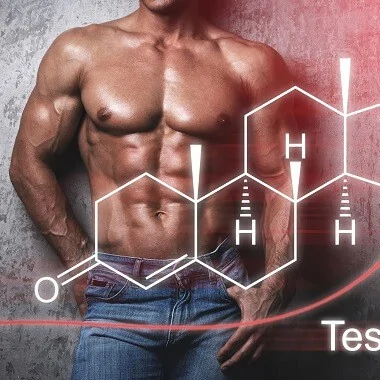 How to increase testosterone levels?
Testosterone is one of the most important male hormones responsible for many functions in the body. It affects, among...Read more
-
 AAKG – facts and myths
Posted in: Tips10/26/2023AAKG, or L-arginine alpha-ketoglutarate, is a dietary supplement that is popular among physically active people...Read more
-
 Are you supplementing smart? 10 power combos for daily well-being
Posted in: Tips07/31/2025A supplement capsule can be more than just a dose of health - it can be a catalyst for deeper change. But did you...Read more
-
 Which supplements for weight loss - what's the best choice?
Posted in: Tips07/12/2023Weight loss is a process whose effectiveness depends on the calorie deficit developed. The most important issue is...Read more
-
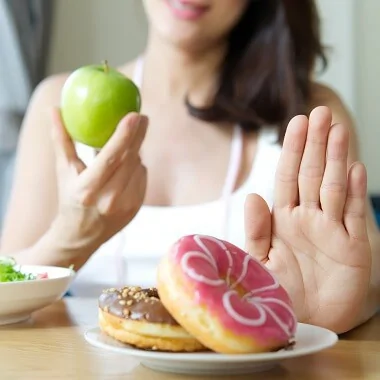 How to lose weight effectively?
Successful weight loss does not at all require sacrifices, catcalling at the gym and giving up all your favorite...Read more
Blog navigationExplore topics
Newsletter
Get a discount on your first order

Expert in supplementation and innovative health, fitness, and beauty solutions.

Offer
Offer Our company
Our company Contact
E-mail address
[email protected]
WhatsApp
+44 739 8562 456ⓒ 2026 Biolabshop. All rights reserved. - Bounous, G., & Gold, P. (1991). Biological activity of undenatured dietary whey proteins: role of glutathione.
- Peptides Peptides
- Nootropics Nootropics
- Amino acids Amino acids