

-
- show all
-
Trending Now
 Disabled this product current language
- Amino acids Amino acids
-
- show all
-
Trending Now
- Nootropics Nootropics
-
- show all
-
Trending Now

Eating in moderation and still gaining weight? Meet the real culprit behind those extra pounds.
Wysłany dnia: 06/01/2026Opublikowane przez Aleksandra DubaHave you ever wondered why some people seem to have endless reserves of energy, even though they enjoy delicious meals and do not count calories at all? Meanwhile, you strictly limit your food intake, diligently practice intermittent fasting, and relentlessly push yourself through workouts, yet your body simply refuses to change.
These struggles are very real: exhaustion sets in, sadness and frustration grow, and irritability and anger start to rise to the surface. It was not your willpower that failed. It was your cellular machinery that failed: the MITOCHONDRIA.
Mitochondria: Your secret ally in the fight for metabolism
The true engine of human vitality lies within our cellular power plants: the mitochondria. We take in food as potential energy, which the body then converts into the key currency of cellular fuel: ATP. When mitochondria function at full capacity, they work like a masterfully tuned engine — flawlessly burning that fuel to drive metabolism and ignite the spark of life.
.jpg)
Metabolic collapse
When mitochondria lose their ability to produce ATP, the body’s metabolism becomes rigid. With nowhere to go, unburned fats and sugars flood the bloodstream and overload tissues. Cells unable to process this fuel are forced to store it as stubborn body fat, which can quickly develop into so-called visceral toxicity.
It is a vicious, inevitable cycle: damaged mitochondria lead to greater fat accumulation. More fat, in turn, leads to further mitochondrial decline.
Food — the framework of life
Food is far more than just fuel. Every bite supplies essential building blocks needed for tissue repair, cell regeneration, hormone synthesis, and the stimulation of immune responses.
.png)
Understanding how your body obtains energy requires looking at its total energy demand:
Internal demand: key baseline processes that are not visible at first glance — digestion, breathing, heartbeat, detoxification, immune function, and cellular renewal.
External demand: the energy needed to function in your environment, including physical activity, stress management, and adaptation to ambient temperature.
What do your mitochondria dislike?
There are many factors that may impair mitochondrial function. The most important include:
1. INFLAMMATION: triggered by cytokines such as IL-6 and TNF-alpha, which may disrupt cellular respiration by reducing the efficiency of the respiratory chain and ATP production.
2. LOW NAD+ LEVELS: the inability to break food down into energy.
3. CHRONIC STRESS: causing activation of the HPA axis (hypothalamic-pituitary-adrenal axis).
4. DISRUPTIONS OF THE GUT MICROFLORA AND MALABSORPTION: as well as impaired function of the excretory system.
5. HORMONAL IMBALANCES: such as estrogen dominance.
6. ORGAN DYSFUNCTION: especially involving the thyroid and liver.
7. INSULIN RESISTANCE: or poor metabolic flexibility.
8. DEFICIENCY in key micronutrients.
9. SLEEP OR CIRCADIAN RHYTHM DISRUPTIONS: which affect the availability of energy substrates and mitochondrial health.
10. EXCESS HEAVY METALS: such as lead, aluminum, or copper.
11. ELECTROMAGNETIC radiation (EMF).
Break the vicious cycle - gain a mitochondrial advantage
Reset your mitochondria and use essential nutrients to improve energy flow and oxygen utilization. Your cells need a rich supply of micronutrients, not an excess of peptides.
- Rebuild muscle mass: to grow more mitochondria and increase their density.
- Restore metabolic flexibility: your diet must support gut health and insulin sensitivity.
- Reduce inflammation: find their root cause and develop your own individual strategy.
- Support proper ATP synthesis: calorie restriction will not unlock fat burning and energy production if mitochondria are weakened.
Scientific sources:
Beyond Calories: Individual Metabolic and Hormonal Adaptations Driving Variability in Weight Management—A State-of-the-Art Narrative Review PMC11676201
Starvation and Triglycerides Reverse the Obesity-Induced Impairment of Insulin Transport at the Blood-Brain Barrier PMC2453080
The Role of Adipose Tissue Mitochondria: Regulation of Mitochondrial Function for the Treatment of Treatment of Metabolic Diseases PMC6801758
Mitochondrial ATP Biosynthesis Is Negatively Associated with FFA in Cardiac and Skeletal Muscle During the Development of Obesity in a Rodent Model PMID: 41009337 PMC12469783
Mitochondrial (Dys)function and Insulin Resistance: From Pathophysiological Molecular Mechanisms to the Impact of Diet PMC6510277
Redefining Metabolic Syndrome as a Fat Storage Condition Based on Studies of Comparative Physiology PMC3660463
Mitochondrial (Dys)function and Insulin Resistance: From Pathophysiological Molecular Mechanisms to the Impact of Diet
Promoting metabolic inefficiency for metabolic disease https://doi.org/10.1016/j.isci.2023.107843
This article is for educational purposes only and does not constitute medical advice. It should not replace professional medical evaluation, diagnosis, or treatment. If you have health concerns, consult a qualified healthcare professional.
FAQ
Why am I not losing weight, even though I eat little and exercise a lot?
The problem might lie in damaged mitochondria. When they work poorly, they don't process food into energy, but store it as fat instead. Restricting calories won't help until you fix your cellular engine.
What damages my mitochondria the most?
The main culprits include chronic inflammation, stress, insulin resistance, micronutrient deficiencies, sleep disruptions, gut problems, as well as heavy metals and electromagnetic fields (EMFs).
How to take care of your mitochondria?
Rebuild muscle mass (more muscle = more mitochondria), restore metabolic flexibility through a diet that supports gut health and insulin sensitivity, reduce inflammation (find its root cause), and support ATP synthesis — remember that restricting calories alone won't help if your mitochondria are weakened. Above all, your cells need a rich supply of micronutrients.
From the very beginning of her cooperation with Biolabshop, Aleksandra Duba has combined professionalism with deep scientific commitment. In the past, she was a physique sports competitor, and her achievements include, among others, an Overall victory at the Olympia Amateur in Italy, which opened her way to the IFBB PRO professional league, as well as a 2nd place at the Arnold Sports Festival in Great Britain and the Polish Championship in 2022.
Her passion for sport and a healthy lifestyle has lasted over ten years. During this time, she systematically and consistently expanded her competencies in the field of dietetics, training, biohacking, and functional medicine, focusing on the practical application of scientific discoveries. Her core interests include the prevention of metabolic and hormonal diseases, anti-aging, and healthspan—the pursuit of maintaining a high quality of life and vitality in the long run.
[readmore]
What does Aleksandra do?
As part of the cooperation, she co-creates the brand's offer and systematically develops scientific competencies, sharing knowledge on her social media profile. She publishes content showing a unique approach to biological issues and materials tailored to audiences with diverse levels of expertise. She also considers the latest scientific reports on products currently in laboratory research phases, including peptides. She encourages the exploration of both basic and advanced aspects of supplementation.
Why is it worth following her progress?
From the perspective of her commitment to a personalized approach, she strives to maximize effects, placing particular emphasis on the holistic nature of well-being. The physical and mental spheres interact in synergy, which opens up infinite possibilities for development and self-improvement.
Choose proven solutions:
Powiązane posty
-
 Which supplements for weight loss - what's the best choice?
Opublikowany w: Tips07/12/2023Weight loss is a process whose effectiveness depends on the calorie deficit developed. The most important issue is...Read more
Which supplements for weight loss - what's the best choice?
Opublikowany w: Tips07/12/2023Weight loss is a process whose effectiveness depends on the calorie deficit developed. The most important issue is...Read more -
 Which gym supplements to choose? - beginners guide
Opublikowany w: Tips07/12/2023First visits to the gym are a time when our motivation is at a really high level. The vision of a sculpted physique...Read more
Which gym supplements to choose? - beginners guide
Opublikowany w: Tips07/12/2023First visits to the gym are a time when our motivation is at a really high level. The vision of a sculpted physique...Read more -
 How do joint supplements work and when should you take them?
Opublikowany w: Tips08/25/2023Joint pain is a common problem that affects many people, regardless of age. In many cases, it is caused by overload...Read more
How do joint supplements work and when should you take them?
Opublikowany w: Tips08/25/2023Joint pain is a common problem that affects many people, regardless of age. In many cases, it is caused by overload...Read more -
 What does ashwagandha help with and how does it work?
Opublikowany w: Tips08/25/2023Withania somnifera or Indian ginseng is a medicinal plant from regions of the Indian subcontinent. It is more...Read more
What does ashwagandha help with and how does it work?
Opublikowany w: Tips08/25/2023Withania somnifera or Indian ginseng is a medicinal plant from regions of the Indian subcontinent. It is more...Read more -
 What are fat burners and how do they work?
Opublikowany w: Tips08/25/2023People who want to reduce quickly are looking for various ways to speed up the entire process. One of them are fat...Read more
What are fat burners and how do they work?
Opublikowany w: Tips08/25/2023People who want to reduce quickly are looking for various ways to speed up the entire process. One of them are fat...Read more -
 Why and when is it worth using supplements and nutrients?
Opublikowany w: Tips08/25/2023Supplements, according to their classification, supplement the diet in case of deficiencies of specific ingredients...Read more
Why and when is it worth using supplements and nutrients?
Opublikowany w: Tips08/25/2023Supplements, according to their classification, supplement the diet in case of deficiencies of specific ingredients...Read more -
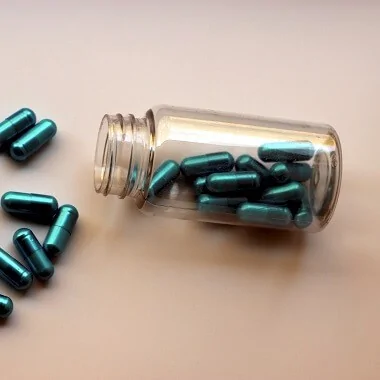 Are fat burners safe?
Opublikowany w: Tips08/25/2023Fat burners are supplements that work by accelerating the reduction of fat tissue accumulated in the body. Such...Read more
Are fat burners safe?
Opublikowany w: Tips08/25/2023Fat burners are supplements that work by accelerating the reduction of fat tissue accumulated in the body. Such...Read more -
 How to ensure good sleep and regeneration while sleeping?
Sleep is one of the most important activities in our lives, which unfortunately we do not pay enough attention to. We...Read more
How to ensure good sleep and regeneration while sleeping?
Sleep is one of the most important activities in our lives, which unfortunately we do not pay enough attention to. We...Read more -
 How to calculate the body's caloric needs?
Zapotrzebowanie kaloryczne to nic innego jak ilość energii, którą trzeba każdego dnia dostarczyć organizmowi, aby móc...Read more
How to calculate the body's caloric needs?
Zapotrzebowanie kaloryczne to nic innego jak ilość energii, którą trzeba każdego dnia dostarczyć organizmowi, aby móc...Read more -
 Slimming diet – 11 rules of healthy weight loss
Proces odchudzania zawsze zaczyna się od myśli, która pojawia się pod wpływem określonych bodźców. Wpadamy na pomysł,...Read more
Slimming diet – 11 rules of healthy weight loss
Proces odchudzania zawsze zaczyna się od myśli, która pojawia się pod wpływem określonych bodźców. Wpadamy na pomysł,...Read more -
 Building muscle mass, how to increase muscle mass?
Building muscle mass is one of the main goals that strength trainers set for themselves. This has to do not only with...Read more
Building muscle mass, how to increase muscle mass?
Building muscle mass is one of the main goals that strength trainers set for themselves. This has to do not only with...Read more -
 Simple and easy weight loss rules for women
Opublikowany w: Diet10/26/2023The fight against excess weight can be long and arduous. The whole process requires not only self-discipline, but...Read more
Simple and easy weight loss rules for women
Opublikowany w: Diet10/26/2023The fight against excess weight can be long and arduous. The whole process requires not only self-discipline, but...Read more
Blog navigationExplore topics
Newsletter
Get a discount on your first order

Expert in supplementation and innovative health, fitness, and beauty solutions.
Our company
Our company Contact
E-mail address
info@biolabshop.eu
WhatsApp
+44 739 8562 456ⓒ 2026 Biolabshop. All rights reserved. - Nootropics Nootropics
- Amino acids Amino acids