

-
- show all
-
Trending Now
- Amino acids Amino acids
-
- show all
-
Trending Now
- Nootropics Nootropics
-
- show all
-
Trending Now
- Peptides Peptides
-
- show all
-
- show all
-
Type
- show all
- 5-AMINO-1MQ
- THYMOSIN
- ACTH-1-39
- Adamax Peptide for Research
- AOD-9604
- ARG-BPC
- B7-33
- BPC-157
- BRONCHOGEN
- Show more
- CARDIOGEN
- CJC-1295
- CJC-DAC
- CORTAGEN
- DSIP
- EPITHALON
- GC-1-SOBETIROME
- GHK-CU Cosmetics & Supplements
- GHRP-6
- SELANK
- GLP-1
- GRF
- HGH: Top quality Human Growth Hormone
- HGH FRAGMENT 176-191
- IGF-1-LR3
- IGF-DES
- IPAMORELIN
- KISSPEPTIN
- KPV
- LARAZOTIDE ACETATE
- Lipotropin
- LL-37
- LIVAGEN
- MATRIXYL
- MELANOTAN
- MELANOTAN 2
- MOTS
- N-ACETYL
- OXYTOCIN
- P-21
- PANCRAGEN
- PEG-MGF
- PROSTAMAX
- PT-141
- RETATRUTIDE
- SEMAX
- SERMORELIN
- SLU-PP-332
- SNAP-8
- TB-500
- THROMBIN PEPTIDE TP508
- Thymogen Alpha-1
- Thymosin Alpha 1
- TRH
- VIP
- Sarms Sarms
- Cosmetics Cosmetics
-
- show all
-
Trending Now

Does nicotine affect sleep? What one controlled study measured
Posted on: 10/16/2026Yes, and the size of the effect is larger than most people expect. In a controlled crossover study, a single overnight nicotine patch reduced total sleep time from 423 minutes to 322 — roughly 100 minutes lost — in healthy men who had never used nicotine. Sleep efficiency fell from 91.6% to 72.5%, and REM sleep was suppressed. One dose, in nicotine-naïve people.
If you are using nicotine to think more clearly, this is the finding that should give you the longest pause.
The study
Sixteen healthy, non-smoking men. A double-blind crossover design, meaning each man served as his own control — one night with a nicotine patch, one night with a placebo patch, with sleep measured objectively both times [1].
Measure Nicotine Placebo Total sleep time 322 min 423 min Sleep efficiency 72.5% 91.6% Time to fall asleep 23.7 min 9.2 min REM sleep 19.7% 23.4% Every number moved in the wrong direction, and several moved a long way. Sleep efficiency — the proportion of time in bed actually spent asleep — dropped by nineteen percentage points. Falling asleep took two and a half times longer.
The detail that makes this study so useful is the population. These men had no nicotine history, so nothing here can be explained away as withdrawal. This is what the molecule does to a night’s sleep in someone whose system has never seen it.
Why it is worse than the totals suggest
Losing 100 minutes of sleep is bad on its own. Losing REM specifically is a different kind of problem.
REM sleep is disproportionately involved in consolidating memory and in emotional regulation — the process that files the day’s experience and takes the edge off it. Suppressing REM is not simply getting less rest. It is degrading a specific process that shapes how well you remember and how steady you feel the next day.
Which produces an awkward arithmetic problem for anyone using nicotine as a cognitive tool. Nicotine’s largest measured cognitive benefit is on short-term episodic memory, at an effect size of 0.44 [2]. Sleep — and REM in particular — is the process that turns short-term memory into durable memory.
You are sharpening the acquisition and degrading the consolidation. It is not obvious that the balance favours you.
Half-life is not the same as duration
A common miscalculation: nicotine’s half-life is around two hours, so a pouch at 6pm should be irrelevant by bedtime.
Half-life is the time it takes to clear half the dose — not the time until effects end. Two things break that assumption.
First, clearance is a curve. After two hours half the dose is gone; after four, a quarter remains; after six, an eighth. “Mostly gone” still leaves a pharmacologically active amount.
Second, nicotine’s main metabolite, cotinine, has a half-life of roughly 16 hours [4]. Cotinine is far less potent, but it is present in meaningful quantities and is closely involved in withdrawal timing. Your body is still processing the afternoon’s nicotine well into the night.
Why the last one of the day matters most
There is a self-reinforcing loop here that catches a lot of people.
Nicotine disrupts your sleep. You wake unrested. Being unrested makes concentration harder. Harder concentration makes the case for a pouch more compelling. And the extra dose disrupts the next night.
At no point in that loop does anything feel like it is going wrong. Each individual decision is reasonable. The trend is downward.
This is the same pattern we describe elsewhere as borrowing rather than supplying: nicotine does not create alertness, it advances it against sleep you have not had yet. The bill arrives that night, and it compounds.
How long before bed should you stop?
There is no trial that has established an optimal cutoff, so anyone giving you a precise number is guessing. What the pharmacology supports is this:
- A minimum of 6 hours before intended sleep clears the majority of a dose, though not all of it.
- 8 to 10 hours is more defensible if sleep quality is your priority — a mid-afternoon cutoff for most schedules.
- Overnight patches should be removed before bed unless a clinician has specifically told you otherwise. The study above is exactly a test of the overnight-patch scenario.
If you want to know whether nicotine is affecting your sleep, the practical test is simple: stop after midday for a week and compare. Most people who try this find the answer within three or four nights.
What about vivid dreams?
Vivid or disturbing dreams are a documented adverse effect on nicotine patch labelling, and it is one of the most commonly reported subjective complaints.
The honest caveat: the evidence classes increased dreaming as a possible rather than firmly established effect, because it is difficult to separate from nicotine withdrawal itself, which also disturbs dreaming. Given that patch use suppresses REM, and REM rebounds after suppression, both mechanisms are plausible.
The trade nobody prices
Nicotine’s benefit is measured in effect sizes on attention tasks. Its sleep cost is measured in minutes and in REM percentage. These are rarely put on the same page, which is how the trade continues to look good.
Put on the same page: a modest, temporary sharpening of attention, against roughly 100 minutes of sleep and suppressed REM.
For a smoker, that comparison is beside the point — they are already paying it, and switching to a lower-toxicant product is a genuine improvement. For anyone else, it is not a close call.
Frequently asked questions
Do nicotine pouches affect sleep? Yes. The published sleep data uses patches, but the active molecule is identical and pouches produce a substantially higher peak blood level [3]. A pouch late in the evening is a poor idea. More on pouches.
How long does nicotine stay in your system? Nicotine’s half-life is about two hours; cotinine, its main metabolite, is around 16 hours. Cotinine is what most nicotine tests actually detect.
Why do I sleep badly when I quit nicotine? Withdrawal itself disturbs sleep, which is why the first week can be worse before it gets better. It resolves over two to four weeks [5]. Full timeline here.
Does nicotine cause insomnia? It measurably increases the time taken to fall asleep — 23.7 minutes versus 9.2 in the controlled data [1] — and reduces sleep efficiency. Whether that meets a clinical definition of insomnia depends on the individual, but the direction is unambiguous.
Is a nicotine patch at night safe? Patches are supplied in both 16-hour and 24-hour formats specifically because of this. If sleep disruption is a problem, this is a conversation to have with whoever prescribed or recommended it.
This article is for education and does not constitute medical advice.
Bibliography
- Choi JB, Lee YJG, Jeong DU. Transdermal nicotine patch effects on EEG power spectra and heart rate variability during sleep of healthy male adults. Psychiatry Investig. 2017;14(4):499–505. PMID: 28845178. doi:10.4306/pi.2017.14.4.499
https://doi.org/10.4306/pi.2017.14.4.499 - Heishman SJ, Kleykamp BA, Singleton EG. Meta-analysis of the acute effects of nicotine and smoking on human performance. Psychopharmacology (Berl). 2010;210(4):453–69. PMID: 20414766. doi:10.1007/s00213-010-1848-1
https://doi.org/10.1007/s00213-010-1848-1 - Mallock-Ohnesorg N, Rabenstein A, Stoll Y, et al. Small pouches, but high nicotine doses. Front Pharmacol. 2024;15:1392027. PMID: 38841367. doi:10.3389/fphar.2024.1392027
https://doi.org/10.3389/fphar.2024.1392027 - Benowitz NL, Burbank AD. Cardiovascular toxicity of nicotine: implications for electronic cigarette use. Trends Cardiovasc Med. 2016;26(6):515–23. PMID: 27079891. doi:10.1016/j.tcm.2016.03.001
https://doi.org/10.1016/j.tcm.2016.03.001 - Hughes JR. Effects of abstinence from tobacco: valid symptoms and time course. Nicotine Tob Res. 2007;9(3):315–27. PMID: 17365764. doi:10.1080/14622200701188919
https://doi.org/10.1080/14622200701188919
Posted in: Science HubFrom the very beginning of her cooperation with Biolabshop, Aleksandra Duba has combined professionalism with deep scientific commitment. In the past, she was a physique sports competitor, and her achievements include, among others, an Overall victory at the Olympia Amateur in Italy, which opened her way to the IFBB PRO professional league, as well as a 2nd place at the Arnold Sports Festival in Great Britain and the Polish Championship in 2022.
Her passion for sport and a healthy lifestyle has lasted over ten years. During this time, she systematically and consistently expanded her competencies in the field of dietetics, training, biohacking, and functional medicine, focusing on the practical application of scientific discoveries. Her core interests include the prevention of metabolic and hormonal diseases, anti-aging, and healthspan—the pursuit of maintaining a high quality of life and vitality in the long run.
[readmore]
What does Aleksandra do?
As part of the cooperation, she co-creates the brand's offer and systematically develops scientific competencies, sharing knowledge on her social media profile. She publishes content showing a unique approach to biological issues and materials tailored to audiences with diverse levels of expertise. She also considers the latest scientific reports on products currently in laboratory research phases, including peptides. She encourages the exploration of both basic and advanced aspects of supplementation.
Why is it worth following her progress?
From the perspective of her commitment to a personalized approach, she strives to maximize effects, placing particular emphasis on the holistic nature of well-being. The physical and mental spheres interact in synergy, which opens up infinite possibilities for development and self-improvement.
Choose proven solutions:
Latest articles
-
 Is Turkesterone a Steroid? What It Actually Is
11/12/2026Chemically, a steroid is any compound built on the cyclopentanoperhydrophenanthrene ring system. Cholesterol is a...Read more
-
 Olive oil and brain health: What the research really shows
11/10/2026Some of the most interesting substances in brain-health research do not come in a capsule. One of them has been...Read more
-
 What does creatine do? It delivers energy, and 3 g a day gets You there
10/28/2026A loading phase of 20 g of creatine a day raises muscle creatine by about 20% in six days. A small dose of 3 g a day...Read more
-
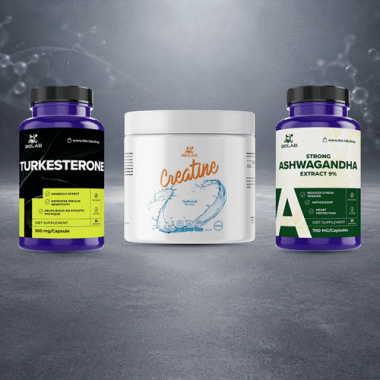 Turkesterone vs creatine vs ashwagandha: Men’s health & the evidence compared
10/15/2026Turkesterone, creatine and ashwagandha — what does the science really say? We compare their mechanisms of action,...Read more
-
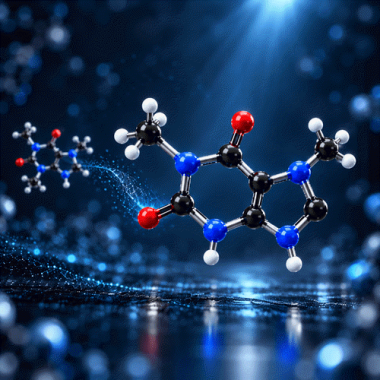 What is paraxanthine, and where does it come from?
Posted in: Science Hub10/13/2026Most descriptions of paraxanthine begin by calling it a caffeine metabolite and move on. That phrasing undersells the...Read more
-
 Nicotine withdrawal timeline: What recovers, and when
Posted in: Science Hub10/09/2026Nicotine receptor changes fully reverse in about three weeks. Brain imaging in people who quit shows receptor binding...Read more
Most read
-
 Simple and easy weight loss rules for women
Posted in: Diet10/26/2023The fight against excess weight can be long and arduous. The whole process requires not only self-discipline, but...Read more
-
 How to increase testosterone levels?
Testosterone is one of the most important male hormones responsible for many functions in the body. It affects, among...Read more
-
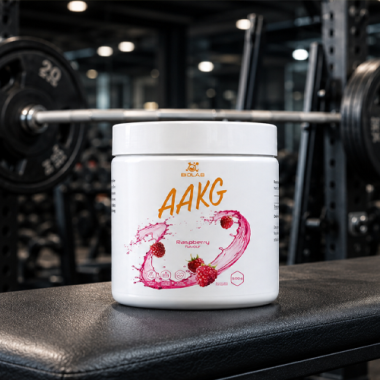 AAKG – facts and myths
Posted in: Tips10/26/2023AAKG, or L-arginine alpha-ketoglutarate, is a dietary supplement that is popular among physically active people...Read more
-
 Are you supplementing smart? 10 power combos for daily well-being
Posted in: Tips07/31/2025A supplement capsule can be more than just a dose of health - it can be a catalyst for deeper change. But did you...Read more
-
 Which supplements for weight loss - what's the best choice?
Posted in: Tips07/12/2023Weight loss is a process whose effectiveness depends on the calorie deficit developed. The most important issue is...Read more
-
 How to lose weight effectively?
Successful weight loss does not at all require sacrifices, catcalling at the gym and giving up all your favorite...Read more
Blog navigationExplore topics
Newsletter
Get a discount on your first order

Expert in supplementation and innovative health, fitness, and beauty solutions.

Offer
Offer Our company
Our company Contact
E-mail address
[email protected]
WhatsApp
+44 739 8562 456ⓒ 2026 Biolabshop. All rights reserved.
- Peptides Peptides
- Nootropics Nootropics
- Amino acids Amino acids